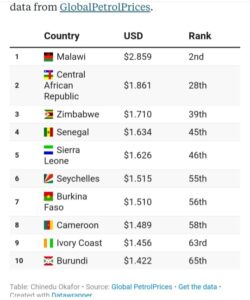





























































FREETOWN — Fuel prices are rising across Africa as volatility in the global crude oil market and tensions in the Middle East push energy costs higher, with Sierra Leone now ranking among the top 10 African countries with the highest fuel prices in March 2026, according to data from GlobalPetrolPrices.
The latest figures show that several African economies are experiencing price shocks linked to fluctuating international oil markets. Experts say the situation highlights how vulnerable the continent’s fuel markets remain to external geopolitical developments.
In Sierra Leone, petrol prices have risen significantly in recent weeks, placing the country among those with the most expensive fuel on the continent. The increase is expected to affect transport costs and the price of basic commodities, particularly as many households and businesses rely on fuel-powered generators for electricity.
Analysts warn that the surge could intensify inflationary pressures and place additional strain on consumers already grappling with rising living costs.
Across the region, similar trends are being recorded. In Nigeria, fuel prices in several states have climbed above ₦1,000 per litre following ex-depot price adjustments by the Dangote Refinery and fluctuations in international oil markets. The increases have triggered higher transport fares and energy costs across the country.
In South Africa, motorists are also bracing for fuel hikes, with petrol prices projected to increase by more than R2 per litre amid rising global crude prices.
Further east, supply chain disruptions have driven steep price increases in Somalia, where petrol prices in Mogadishu have surged by more than 75 percent since early March. Reports indicate prices jumped from about $0.65 to over $1.15 per litre, with daily increases of around 10 cents.
Meanwhile, some countries have seen temporary relief. Fuel prices have declined in Malawi, Senegal, Cameroon, Burkina Faso, Ivory Coast, and the Central African Republic, even as other nations record increases.
Energy experts note that global crude prices have swung sharply in recent weeks, climbing from around $60 per barrel to $120 before falling back near $90, a fluctuation that has amplified uncertainty in African fuel markets.
They caution that without stronger regulatory measures and investment in local energy production, persistent price hikes could deepen inequality and slow economic development across the continent.