







































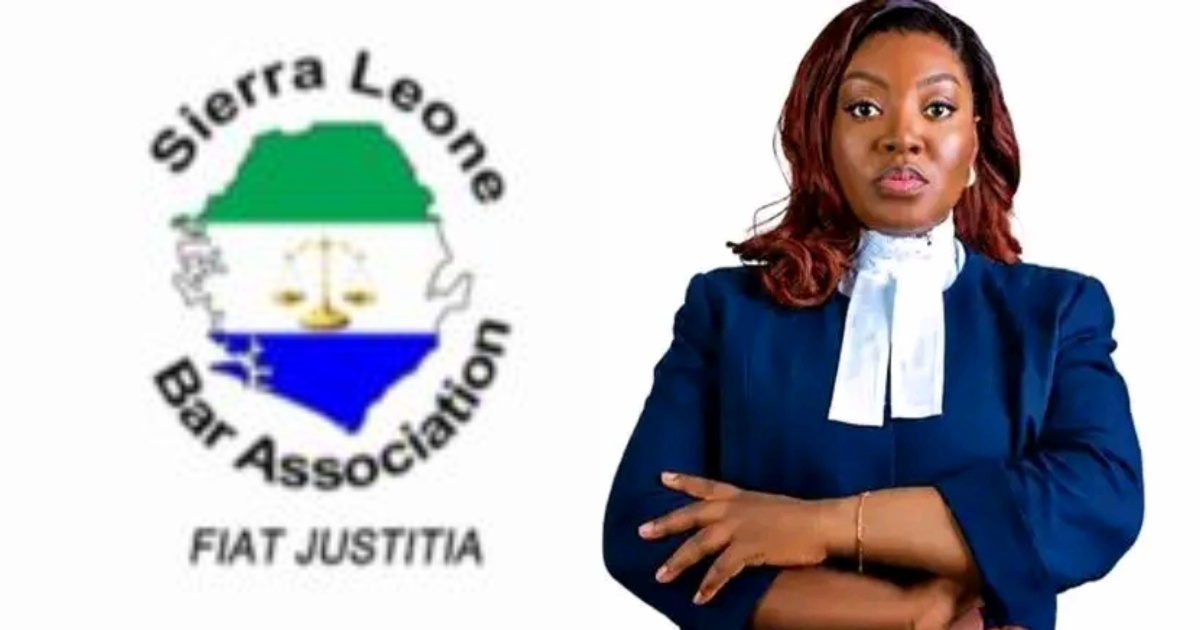
The governance dispute rocking the Sierra Leone Bar Association (SLBA) has taken a new turn after presidential aspirant Martina Baindu Egbenda and her team issued a strongly worded statement, while the Association’s Board of Directors announced an Extraordinary General Meeting (EGM) to deal with the fallout from the disrupted Annual General Meeting (AGM).
In a statement released on 1 August 2026, Egbenda and her campaign team thanked supporters and colleagues for their patience during what they called a difficult period for the Bar. At the same time, they raised serious questions about the way the Association has been administered in the run-up to the AGM.
The team pointed out that members were required to pay their subscriptions by 29 May 2026, even though some had called for an extension to allow more lawyers to participate.
They also questioned the postponement of the AGM and the process used to compile and publish the membership list.
Particular concern was raised about a High Court judgment delivered on 23 July 2026 that dealt with the conduct of the AGM. While acknowledging the court’s intervention, Egbenda’s team asked whether all the court’s directives had been properly carried out before the meeting was scheduled to take place.
They further highlighted what they described as major discrepancies in the membership records. According to the statement, more than 1,000 names appeared on the published list, yet banking records reportedly showed that only about 528 members had paid their subscriptions by the deadline.
Despite these concerns, Egbenda’s team said they remain committed to seeing the affairs of the Bar conducted fairly, transparently and in line with the rule of law. They also praised lawyers and supporters for staying calm and professional throughout the recent events.
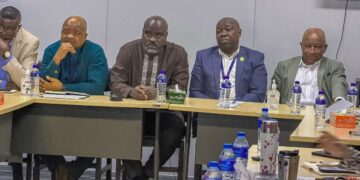
Meanwhile, the SLBA Board of Directors has moved to restore order by calling an Extraordinary General Meeting for Thursday, 6 August 2026, at the D’Bim D’ Bam Multipurpose Complex in Freetown.
In its official notice, the Board explained that the AGM could not go ahead after it was interrupted by the Sierra Leone Police. As a result, the Association was unable to complete its constitutional business, including the election of a new Board of Directors.
The Board noted that the mandate of the current leadership expires on 18 August 2026. Members will therefore be asked to consider resolutions that will keep the Association running until elections can be properly held.
One of the main proposals is the creation of a Caretaker Body that would take temporary charge of the Association’s affairs. This body would protect the Association’s assets and records, keep operations running, help complete outstanding constitutional processes, organise the AGM and oversee elections for a new Board.
Members will also decide how long the caretaker arrangement should last. The notice makes clear that the caretaker body’s work would end as soon as a newly elected Board is installed.
The two developments paint a picture of an Association facing serious governance challenges at a critical time in its history.