




































Freetown, Sierra Leone – November 26, 2025 – In a swift response to a damning BBC Africa Eye investigation that lifted the veil on a clandestine network of herbalists trafficking human body parts for black magic rituals, Sierra Leonean authorities have arrested several suspects, signaling a renewed push to dismantle what officials describe as a “diabolical” underground economy preying on the nation’s most vulnerable.
The breakthrough came hours after the report’s release. In an exclusive interview with Liberty Online Television, Ibrahim Mohamed Sama, Head of Operations at the Operations Support Division (OSD), Sierra Leone’s elite anti-crime unit, confirmed that “most” of the herbalist networks exposed by the BBC are now in custody.
Among those detained are Idara and two associates, charged in June with sorcery and possession of ritual weapons; they have pleaded not guilty and remain on bail pending deeper probes. Kambia’s police, handed the evidence on Kanu, have yet to update publicly, though Sama hinted at ongoing surveillance to avoid tipping off accomplices.
Assistant Superintendent Aliu Jallo, who led a recent shrine raid, emphasized inter-agency cooperation: “When we get intelligence on a dangerous witchdoctor, we work with traditional healers.” Yet he admitted the challenges: “I will not go and provoke situations” without backup, reflecting the pervasive dread of juju’s purported curses even among law enforcement.
The probe, titled Money Rituals: Africa’s Deadliest Taboo and aired earlier this week, featured undercover footage of self-proclaimed juju practitioners openly hawking human remains for “money charms” and power-enhancing ceremonies.
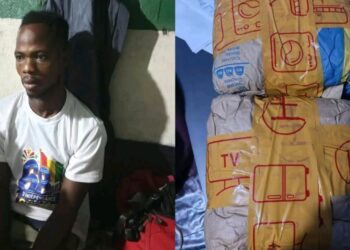
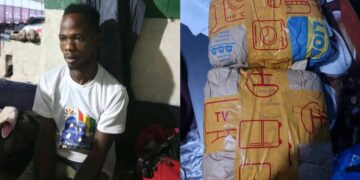
One of suspects, identified only as “Kanu” in the border town of Kambia, boasted of catering to high-profile clients across West Africa, including Senegalese politicians, during election seasons. He quoted a staggering 70 million leones (approximately £2,500 or $3,000) for the limbs of a woman and even displayed what he claimed was a dried human skull, ready for collection.
Another figure, (Idara) from the crime-ridden Waterloo suburb of Freetown, bragged about commanding a syndicate of up to 250 herbalists, offering body parts sourced from ritual murders.
The report’s revelations have cast a stark light on Sierra Leone’s enduring struggle with ritual killings, a scourge rooted in widespread belief in juju, a form of black magic that promises wealth, political success, or protection through gruesome sacrifices.
Despite the country’s predominantly Muslim and Christian population, these practices persist, often fueled by poverty and superstition. Sierra Leone, one of the world’s poorest nations with a per capita income of around $500 annually, is still reeling from the scars of an 11-year civil war that ended in 2002 and the 2014-2016 Ebola outbreak that claimed nearly 4,000 lives.
World Health Organization data underscores the healthcare vacuum: In 2022, the country had just 1,000 registered doctors serving over 8 million people, compared to an estimated 45,000 traditional healers. many of whom blur the line between legitimate herbal medicine and illicit sorcery.
The BBC’s investigation, led by journalist Mariam Kamara, was tragically personal. In May 2025, Kamara’s 28-year-old cousin, Fatmata Conteh, was found dead by a roadside in Makeni with her front teeth missing, a hallmark of ritual mutilation. The family’s desperate bid for justice faltered when an autopsy in Freetown proved inconclusive, hampered by the nation’s sole pathologist and limited forensic resources. No arrests have followed.
This echoes a pattern of stalled cases. Four years ago, 11-year-old Papayo Kalokoh vanished while selling fish in Makeni; his mutilated body, missing vital organs, eyes, and an arm, was later pulled from a well. His mother, Sallay Kalokoh, told the BBC, “They killed my child and now there is just silence.”
Police classified it as a homicide but stopped short of labeling it a ritual killing, a reluctance experts attribute to officers’ own fears of supernatural reprisal.
High-profile incidents fare no better. In 2023, a university lecturer disappeared in Freetown, only for his body to be unearthed in a herbalist’s shrine in Waterloo. Though suspects were detained and the case escalated to the High Court, sources say proceedings have ground to a halt, with the accused released on bail.
The BBC report notes that ritual murders aren’t tracked as a distinct crime category, leaving the true toll, a conservative estimate of dozens annually, shrouded in mystery.
Legitimate healers, like Sheku Tarawallie, president of the Council of Traditional Healers, condemned the “diabolic” impostors tarnishing their profession. “We are trying very hard to clear our image,” Tarawallie said. “The ordinary person doesn’t understand, so they class us all as bad herbalists.” His group collaborates with police on raids, but cultural taboos often hinder progress.
As families like the Kalokohs continue their vigil for closure, Sama’s OSD pledges zero tolerance: “This trade ends with us. No more shadows.” For now, the arrests offer a flicker of hope in a nation long haunted by the unseen horrors of its hidden markets.