








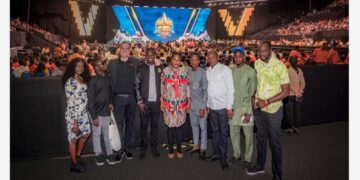






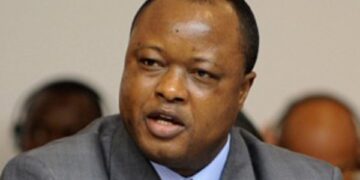
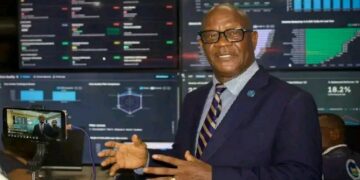





















Washington, D.C. – February 6, 2026 – Sierra Leone’s Foreign Minister Alhaji Musa Timothy Kabba led a high-level delegation to the United States’ inaugural Critical Minerals Ministerial on February 4, marking a significant step in the nation’s efforts to enhance its role in the global minerals economy.
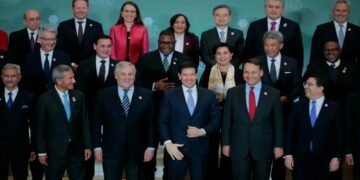
The summit, hosted by U.S. Secretary of State Marco Rubio at the State Department, convened representatives from 54 countries and the European Commission to tackle vulnerabilities in critical mineral supply chains essential for technological advancement, clean energy, and national security.
The event underscored growing international concerns over the dominance of certain nations, particularly China, in the production and processing of critical minerals like lithium, cobalt, copper, and rare earth elements, which are vital for batteries, electronics, and defense systems. U.S. Vice President JD Vance, in his opening remarks, proposed a groundbreaking initiative: the formation of a “preferential trade zone” aimed at stabilizing global mineral markets through coordinated policies, strategic investments, and diversified sourcing.
This move, part of the Trump administration’s “America First” strategy, seeks to reduce reliance on adversarial suppliers and foster resilient partnerships among allied nations.
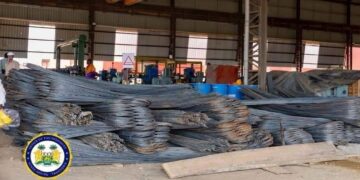
Minister Kabba’s participation highlighted Sierra Leone’s strategic positioning as a resource-rich partner, with the country boasting substantial deposits of rutile (a key titanium source), bauxite, iron ore, gold, and emerging lithium prospects. Accompanied by Deputy Minister of Mines Hon. Umaru Napoleon Koroma, the delegation arrived in Washington on February 2 to engage in discussions on sustainable mining, value addition, and job creation through transparent international collaborations.
Sierra Leone aims to attract investments that align with its national development goals, emphasizing environmental safeguards and community benefits.
Among the African nations represented were Angola, the Democratic Republic of the Congo, Guinea, Kenya, Morocco, and Zambia, reflecting the continent’s pivotal role in global mineral supplies. While the U.S. signed new bilateral memorandums of understanding (MoUs) or frameworks with 11 countries, including African partners Guinea and Morocco, Sierra Leone did not ink a formal agreement at this summit.
However, the forum provided a platform for bilateral talks, with delegates focusing on fair pricing, long-term processing projects, and reducing supply chain risks amid geopolitical tensions.
In his address, Secretary Rubio emphasized the need for collective action: “This ministerial is about accelerating shared work to secure these critical components vital to innovation and security.”
Vice President Vance echoed this, critiquing the “failing” international market and advocating for policies that prioritize trusted allies. For Sierra Leone, the engagement aligns with broader efforts to reform resource governance, as noted in local reports, potentially unlocking technical assistance and foreign direct investment to bolster its mining sector.
The summit’s outcomes could have far-reaching implications, including enhanced U.S.-Africa cooperation to counterbalance China’s influence in mineral extraction. Sierra Leone’s involvement reinforces its commitment to leveraging natural wealth for shared prosperity, positioning the West African nation as an emerging player in global economic diplomacy.
As discussions continue, experts anticipate follow-up initiatives, such as the task force convened by U.S. officials to engage mining industry leaders.