





























Freetown — Sierra Leone has taken a significant step toward realising the long-discussed Lungi Bridge, with the formal launch of feasibility studies that could finally create a direct road link between the capital and the country’s main international airport.
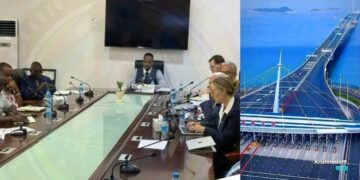
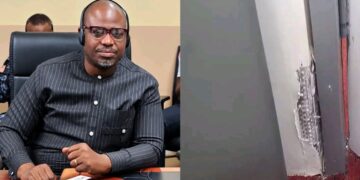
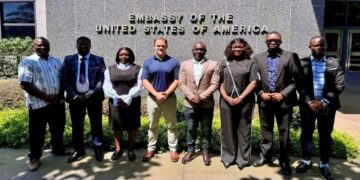
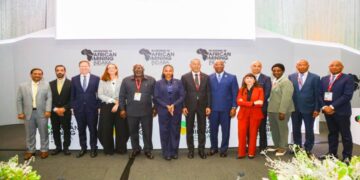
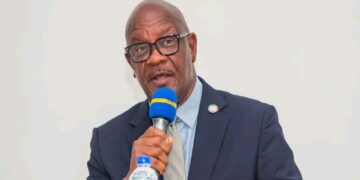
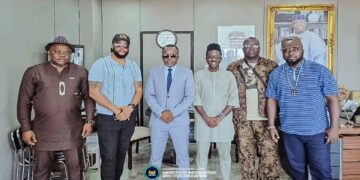
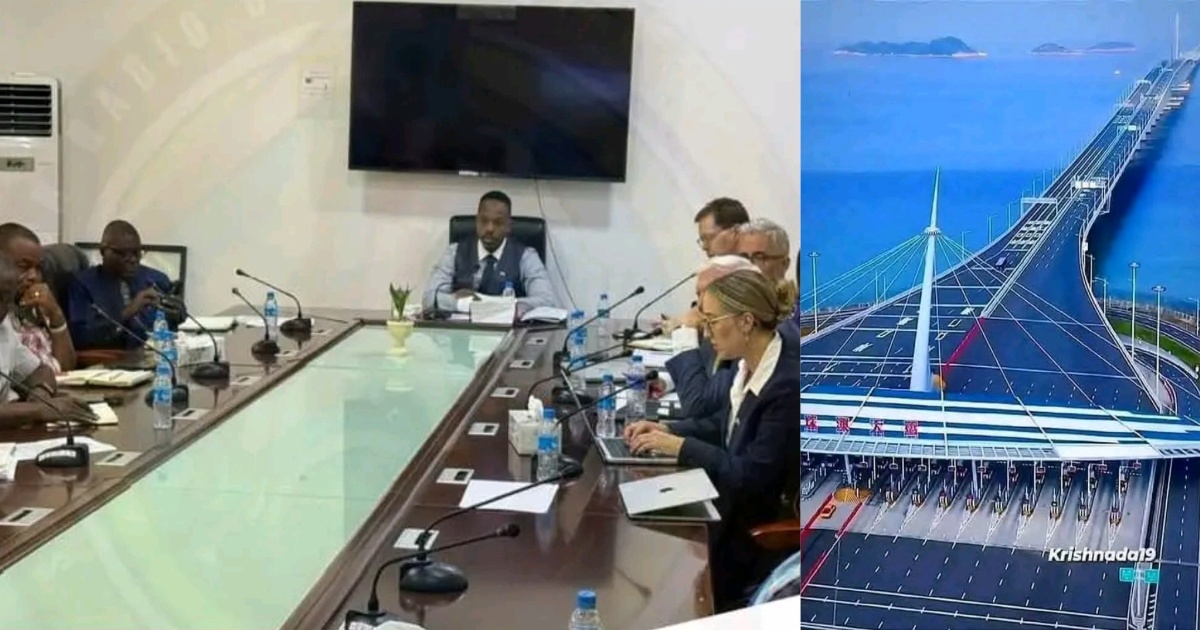
Chief Minister Dr. David Moinina Sengeh chaired the kickoff meeting involving Sierra Leonean government officials and representatives of Acrow Bridge, the U.S. company selected as the project’s developer.
The U.S. Embassy in Freetown confirmed the launch, noting that the studies are funded by a grant from the U.S. Trade and Development Agency (USTDA).
The proposed bridge would span the Sierra Leone River estuary, connecting Tagrin on the Lungi side to Portee in Freetown. At roughly seven kilometres, it is expected to feature a two-lane carriageway with reinforced concrete piers and metal decking, designed with enough clearance for vessels to pass underneath.
Why the Bridge Matters to Sierra Leoneans
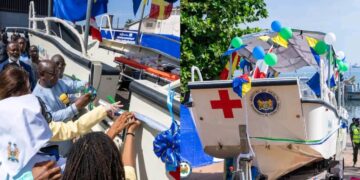
For decades, travellers between Freetown and Lungi International Airport have relied on ferries, speedboats, water taxis, or a lengthy road journey around the estuary that can take several hours. The government ferry remains the cheapest option used daily by market women, traders, and ordinary passengers, but services have repeatedly faced mechanical problems, overcrowding, and delays. Faster private boats cost significantly more, while helicopter transfers are limited and expensive.
The airport itself received a major upgrade, with a new terminal opened in 2023 as part of a roughly $270 million modernisation. Yet the water crossing continues to act as a bottleneck for passengers, cargo, tourism, and business activity. A fixed road connection is widely seen as essential for smoother trade, better access to the northern regions, and stronger economic opportunities around both Freetown and Lungi.
Project Background and Next Steps
The Lungi Bridge has been discussed for years under successive governments. In June 2025, the Government of Sierra Leone signed a Memorandum of Understanding with Acrow Corporation of America for a design-build-operate-transfer (DBOT) arrangement. Earlier cost estimates had ranged much higher, but a 2026 National Investment Board document puts the preliminary figure for the roughly seven-kilometre structure at between $600 million and $700 million. Financing for actual construction remains to be secured and will likely involve a mix of long-term debt, equity, and other structured funding.
In September 2026, Chief Minister Sengeh announced the $1.6 million USTDA grant to support the preparatory work. The studies will examine traffic flows, environmental and social impacts, and other technical requirements needed to make the project bankable and attractive to private investors. A preliminary engineering assessment was already presented to stakeholders at the National Investment Board on 20 November 2026. The next detailed phase, covering full feasibility studies, engineering designs, bill of quantities, and updated cost estimates, is expected to run from January to June 2027.
The U.S. Embassy said the project, if realised, could strengthen connectivity, facilitate trade, and open new economic opportunities across the country. For many Sierra Leoneans who have waited years for a reliable link to the airport, the launch of these studies represents tangible progress—though the road from studies to actual construction will still depend on successful financing and final technical clearance.