





























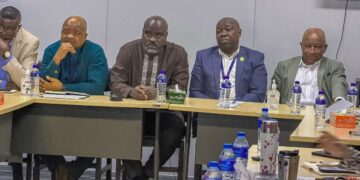





















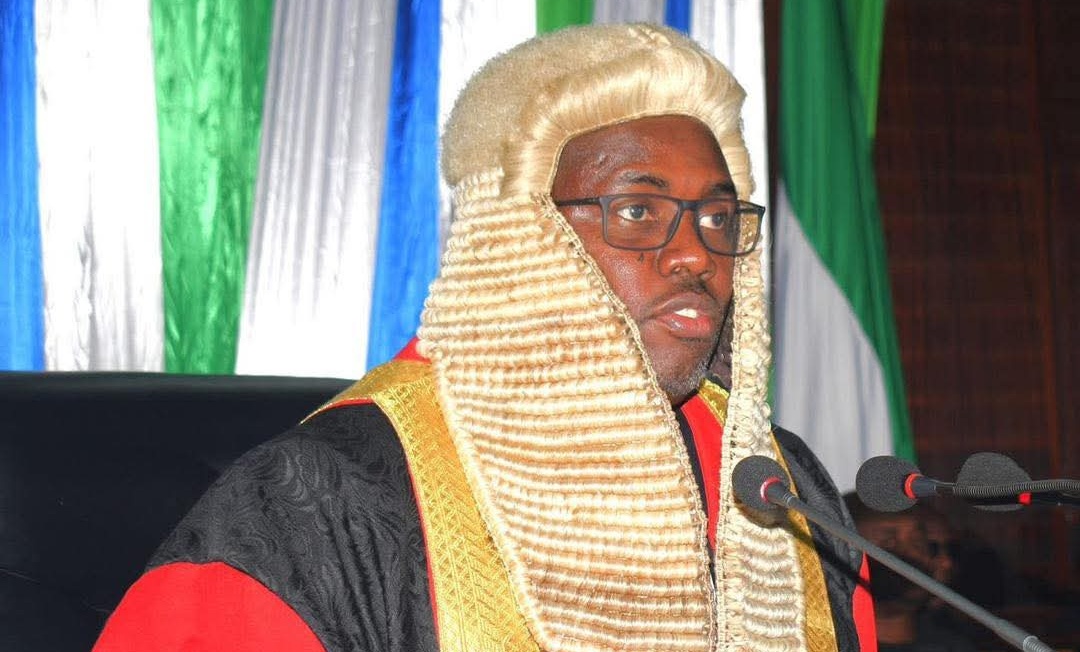
Freetown, Wednesday 12 August 2026 – Speaker of Parliament Rt. Hon. Segepoh Solomon Thomas has firmly defended his decision to allow the Constitutional Amendment Bill to pass by simple majority, declaring that the Speaker’s ruling is final and cannot be questioned or reviewed by any court.
In a statement issued on Wednesday, the Speaker reaffirmed that his ruling was grounded in Section 91(1) of the 1991 Constitution. That provision states that, except where the Constitution itself provides otherwise, any question proposed for decision in Parliament “shall be determined by a majority of the votes of the Members present and voting.”
“The Speaker’s ruling is final and cannot be interpreted or enquired into by any court of law,” Thomas said.
The statement follows the dramatic events of Monday 10 August, when Parliament passed the Constitution of Sierra Leone (Amendment) Bill, 2025 after opposition All People’s Congress (APC) MPs staged a walkout. The opposition, led by Minority Leader Hon. Abdul Kargbo, insisted that Section 108 of the Constitution requires a two-thirds majority of all Members of Parliament for any constitutional amendment on both the second and third readings. They argued the Bill could not lawfully be passed by simple majority.
Speaker Thomas ruled otherwise. He maintained that while the final passage of a constitutional amendment bill as a whole requires the two-thirds threshold under Section 108, votes on individual clauses during the committee stage are governed by the ordinary simple-majority rule in Section 91(1). The Bill was thereafter passed, with reports indicating around 97 votes in favour after the APC walkout. No detailed voting figures were officially released.
The amendments introduce major changes to Sierra Leone’s electoral system ahead of the 2028 elections. Key provisions include:
– Reducing the presidential election threshold from 55% to a simple majority (50% + 1), with a requirement that a candidate also secure at least 20% of the vote in two-thirds of the country’s districts to avoid a run-off;
– Making proportional representation the permanent system for electing ordinary Members of Parliament;
– Introducing a constitutional 30% quota for women in political nominations and leadership positions;
– Requiring the President to consider regional balance, gender equality and minority inclusion when making appointments.
The ruling SLPP government has argued the reforms will reduce the cost, tension and security risks of presidential run-offs, broaden participation and complete a constitutional review process that dates back to the 1999 Lomé Peace Agreement and the Truth and Reconciliation Commission recommendations. President Julius Maada Bio had earlier urged Parliament to approve the Bill.
The APC has strongly opposed the lower presidential threshold and permanent proportional representation, saying the 55% requirement forces candidates to seek broader national support and gives the winner greater legitimacy. The party has, however, indicated support for some other aspects of the Bill, including the women’s quota.
Reports also indicate that the Speaker has referred aspects of the procedural dispute to the Supreme Court for clarity, even while maintaining that his own ruling on the voting method remains final and shielded from judicial inquiry under parliamentary privilege and the Constitution.
Parliament has been adjourned until 29 October 2026. The Bill will still require presidential assent, and certain entrenched provisions may ultimately need a national referendum under Section 108.





Excellent work done, thanks to our parliamentarians. You have represented us in the best way.