






































By Kabs Kanu
When I saw a Liberian on social media ridiculing Sierra Leone for Guinea’s constant bullying and bragging that Guinea would not dare do the same to Liberia, I laughed at the folly of the statement .
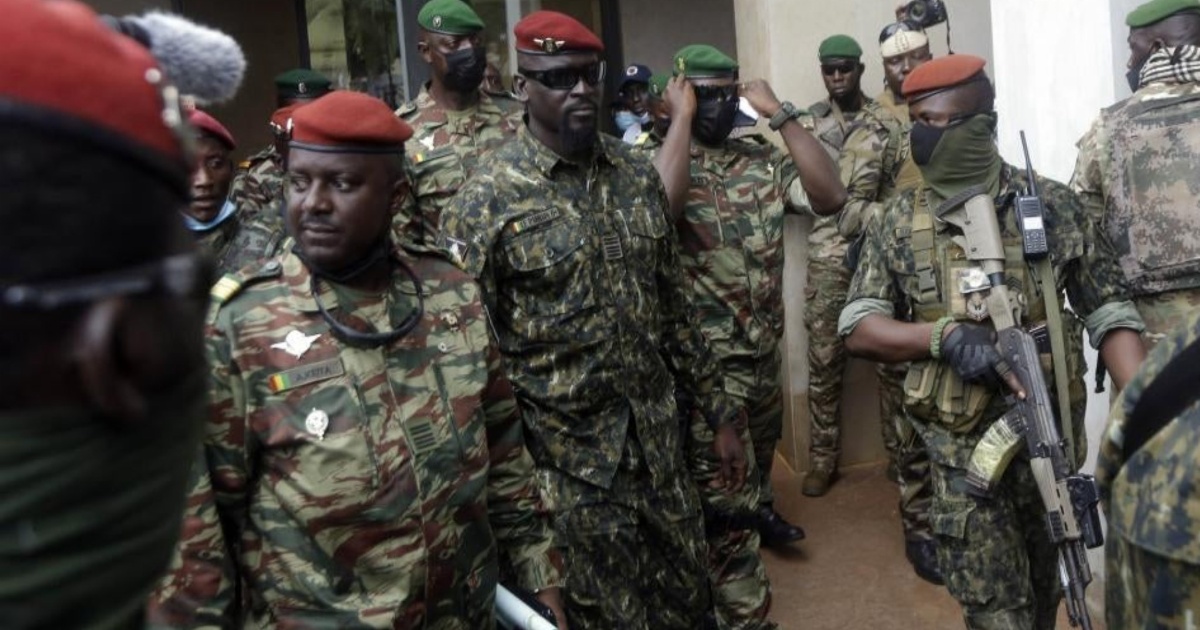
Run with this to the bank. However mad we are with them for what they are doing to our country, Guinea has a formidable army that can take on and beat both Sierra Leone and Liberia combined . Let us not run away from the fact that both Sierra Leone and Liberia have much weaker armies, compared to Guinea . Both countries do not even have an airforce , not to mention fighter jets or helicopter gunships. Guinea would crush them handsdown —- and these are the reasons .
Guinea’s Fortress Mentality: How Sékou Touré Militarized the State While Sierra Leone and Liberia Looked Inward
When Ahmed Sékou Touré led Guinea to independence in 1958, he did so defiantly—rejecting continued association with France in a historic referendum. But that bold break came at a cost. Touré lived—and governed—in constant fear of destabilization, invasion, and regime change sponsored by what he consistently described as “imperialist forces,” particularly France. That fear shaped the Guinean state. It militarized it. Guinea , since Sekou Toure’s days , has been a nation on Permanent war footing.
From the early 1960s, Sékou Touré treated external security as existential. He believed France would never forgive Guinea’s outright rejection of colonial ties. The failed 1970 Portuguese-backed invasion (Operation Green Sea) only reinforced his conviction that foreign enemies were circling. As a result, Guinea invested heavily in its military infrastructure. Border security was treated as sacred. Intelligence and counterintelligence structures were strengthened. The armed forces were trained primarily to repel foreign incursions.
Guinea became a fortress state—rigid, vigilant, and defensive. Its borders were not casual lines on a map; they were shield walls against perceived imperial encroachment.
In Sierra Leone and Liberia on the contrary, armies were turned inwards . Both Sierra Leone and Liberia historically prioritized internal control over external defense. Rather than building strong conventional armies prepared for cross-border threats, successive governments in both countries focused military training on internal security and using security forces to deter political rivals.
Both Sierra Leone and Liberia built make- shift military structures designed to protect regimes rather than territorial sovereignty.
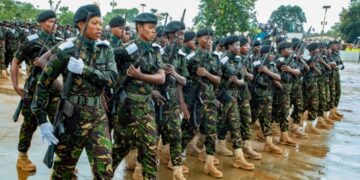
The result is that while the Republic of Sierra Leone Military Forces ( RSLMF ) and the Armed Forces of Liberia ( AFL ) are adept at crowd control, political suppression, and regime survival, comparatively they are weaker in external deterrence.
History would expose this imbalance. Both countries eventually descended into brutal civil wars in the 1990s, revealing just how fragile their security architectures were. Rebels of the NPFL and RUF easily breached their borders and entered their countries.
The Falaba disaster was a Warning Sign and inevitable.
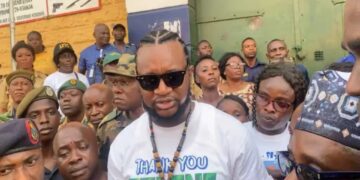
Two days ago, tensions escalated at Falaba along the Guinea–Sierra Leone border. The arrest of nearly 20 Sierra Leonean military and police personnel by Guinean authorities highlights a deeper reality: Guinea still treats its borders with uncompromising seriousness. Falaba, a district in northern Sierra Leone, lies close to contested or sensitive border demarcations. Border ambiguities in West Africa—many inherited from colonial-era cartography—often simmer quietly until they flare.
What this recent development underscores is not merely a localized dispute. It reflects contrasting national security philosophies: Guinea remains deeply protective of its territorial integrity, while Sierra Leone’s security institutions continue to grapple with limited capacity and coordination in external defense matters.
Sierra Leone is paying the Price for Misplaced Priorities
Security doctrine matters. We did not know that . We did not see the need for a very strong and equipped army.
Guinea’s model, forged in fear of imperialist invasion, may have fostered authoritarian excesses under Sékou Touré—but it also produced a state highly sensitive to sovereignty violations.
Sekou Toure left his successors a military mindset and security structure that they have been using to lethal effect, especially against Sierra Leone.
Sierra Leone and Liberia, by comparison, developed political-military systems focused more on domestic power preservation than external vigilance. Over time, this weakened border control, deterrence capacity, and national defense readiness.
The Falaba humilation suffered by Sierra Leone had been coming. It is not just a border incident. It is a reminder that national security neglect carries long-term consequences.
West Africa’s borders remain fragile constructs drawn by colonial administrators who often ignored ethnic and geographic realities. But the way modern states choose to defend—or neglect—them defines their sovereignty.
Sékou Touré governed in fear. That fear built a hardened border state.
Sierra Leone and Liberia governed with different anxieties—fears of coups, opposition, and internal dissent. Their militaries reflected those priorities.
Today, as border tensions resurface, the contrast is stark.
Sierra Leone and Liberia must learn that external security cannot be an afterthought. In geopolitics, weakness invites pressure. And history shows that states which fail to prioritize territorial defense often find themselves reacting—rather than controlling—the narrative.
The events at Falaba may be resolved diplomatically. But the strategic questions they raise will linger. Sovereignty, once compromised, is never easily reclaimed. Today, Guinea is reaping the fruits of her external security imperatives. She is stronger militarily and can defeat Sierra Leone and Liberia combined .
Is this not something our politicians must learn from ?