



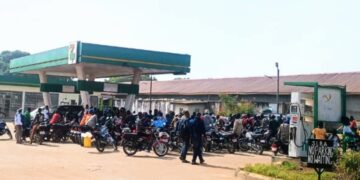

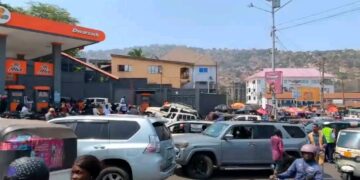




































Freetown, Sierra Leone – April 2026 — Sierra Leone is facing a renewed fuel shortage crisis, with long queues snaking outside petrol stations in major towns and cities, including the capital Freetown.
Residents and commercial drivers report that supplies of petrol and diesel are dwindling rapidly at many outlets, disrupting transportation, businesses, and everyday life as the situation worsens by the hour.
Fuel stations in several districts have either limited stock or run completely dry, leaving many commuters stranded and commercial vehicle operators frustrated. The scarcity is compounding existing economic strains, with fears that prolonged shortages could trigger higher transport fares, spikes in food and goods prices, and broader disruptions if authorities and suppliers do not intervene swiftly.
Sierra Leone imports 100% of its petroleum products, making the country particularly vulnerable to international market fluctuations.
Recent reports indicate that global oil prices have surged due to geopolitical tensions in the Middle East, including conflicts involving Iran and disruptions to key shipping routes like the Strait of Hormuz. These factors have driven up import costs and created uncertainty in supply chains.
In March 2026, the National Petroleum Regulatory Authority (NPRA) adjusted pump prices upward, with petrol rising from NLe 28.50 to around NLe 32 per litre (and further potential hikes to NLe 34.50 or more discussed in recent updates). Diesel has seen similar increases, sometimes reaching NLe 35 or higher.
The government has attributed these changes primarily to global factors, including rising Platts benchmark rates and supply route disruptions, while noting domestic elements like exchange rate pressures and the 2026 Finance Act’s excise duties.
Despite the challenges, government officials have repeatedly assured the public of adequate strategic stocks. As of mid-March, Trade and Industry Minister Alpha Ibrahim Sesay stated that petrol reserves could last approximately 54 days and diesel around 43 days at normal consumption rates (the country uses about 1.5 million litres daily).
The government is engaging oil marketing companies to coordinate imports and prevent artificial shortages or price manipulation, while emphasizing ongoing monitoring of global markets.
This is not the first time Sierra Leone has grappled with fuel supply issues. Past episodes, including in 2024, saw stations closing due to delayed imports and distribution problems, prompting panic buying and temporary halts in public transport. Critics argue that heavy reliance on imports, combined with limited local refining capacity and occasional logistical bottlenecks, leaves the economy exposed to external shocks.
The current situation is already rippling through the economy: higher fuel costs contribute to increased transportation expenses, which in turn affect the price of essentials like food and goods in a nation that also imports a significant portion of its rice and other commodities. Businesses reliant on generators for power during frequent electricity outages face added strain, while daily wage earners and commercial drivers bear the immediate brunt.
Authorities have urged calm and discouraged panic buying, while calling for collaboration between the NPRA, the Ministry of Trade and Industry, and private sector players to stabilize supply.
As queues lengthen and frustration mounts, many Sierra Leoneans are watching closely to see whether swift imports or policy measures can avert a deeper crisis in the coming weeks.
The government maintains that prices remain among the more manageable in the region relative to global benchmarks, but the combination of scarcity and recent hikes has heightened concerns over the cost of living for ordinary citizens.
Further updates from the NPRA and relevant ministries are expected as the situation evolves.