










































Freetown, Sierra Leone – April 3, 2026 — In a significant administrative intervention aimed at preventing the breakdown of basic local services, the Ministry of Finance has authorised Chief Administrators in opposition-controlled councils to exercise emergency powers for financial transactions on the Public Financial Management (PFM) Smart System.
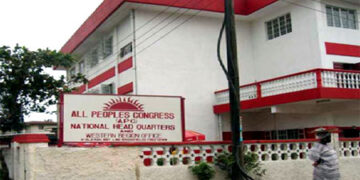
The directive, contained in a strongly worded letter dated 1 April 2026 and signed by Finance Minister Sheku Ahmed Fantamadi Bangura, comes amid the ongoing boycott by the All People’s Congress (APC) of Parliament and local governance structures.
The letter, addressed to the Minister of Local Government and Community Affairs, confirms that the Ministry obtained legal clearance from the Office of the Attorney-General and Minister of Justice.
A Solicitor-General’s opinion dated 24 March 2026 affirms that Chief Administrators, as “vote controllers and administrative heads of councils,” qualify as “A” signatories on the system.
While Chief Administrators already had the technical capability to upload transactions to the PFM Smart System, part of broader reforms to enhance transparency, real-time reporting, and accountability in local councils, the new measure allows them to authorise transactions only with prior approval from the Accountant-General in the present circumstances.
“These measures will ensure the uninterrupted delivery of services in the affected Local Councils while maintaining the necessary financial controls and oversight mechanisms as prescribed by law,” Minister Bangura stated.
On 2 April 2026, the Ministry of Local Government and Community Affairs, through Permanent Secretary Alusine A. Joaque, swiftly forwarded the directive to all Chief Administrators in APC-led councils. The circular urged them to “take necessary action to necessitate service delivery in their localities.”
Root Cause: APC’s Boycott Over Controversial Electoral Appointment
This development is the latest fallout from the APC’s decision to withdraw its 54 Members of Parliament, mayors, chairpersons, and councillors from official duties. The boycott, which began in late February 2026, protests President Julius Maada Bio’s appointment of Edmond Sylvester Alpha as Chief Electoral Commissioner and Chairman of the Electoral Commission for Sierra Leone (ECSL).
The APC has repeatedly described the appointment as unconstitutional, lacking credibility, and a violation of post-2023 electoral reform agreements, including recommendations from the Tripartite Committee. The party has demanded Alpha’s removal to restore trust ahead of the 2028 general elections.
With many APC elected officials absent, several local councils, particularly in APC strongholds, faced imminent financial paralysis. This threatened critical operations including staff salary payments, development projects, waste collection, sanitation, road maintenance, and other essential public services.
Government Stance and Opposition Reaction
Government sources insist the interim arrangement is purely administrative and temporary. It does not constitute a political takeover but is intended solely to safeguard service delivery and prevent governance vacuums while upholding legal and financial oversight.
However, APC critics have strongly condemned the move, describing it as an attempt to “usurp the authority of elected officials” and operate the councils by proxy through appointed administrators. They argue the directive further undermines democratic governance at the local level.
The crisis has already disrupted parliamentary business and local council operations, raising broader concerns about service delivery to citizens and the stability of Sierra Leone’s democratic institutions as the country looks toward future elections.
The PFM Smart System forms part of ongoing public financial management reforms supported by international partners, aimed at strengthening transparency and efficiency at both central and local government levels.
As tensions persist, stakeholders are closely monitoring whether these emergency measures will stabilise essential services or further escalate the political standoff between the ruling Sierra Leone People’s Party (SLPP) government and the main opposition APC.