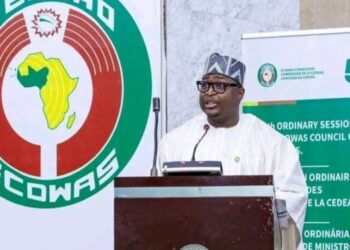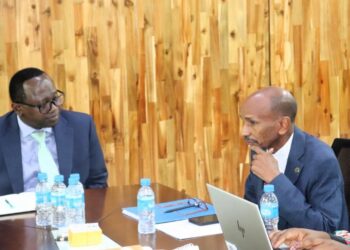
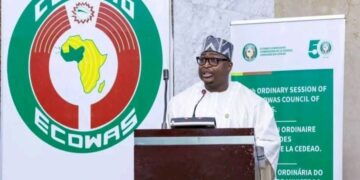

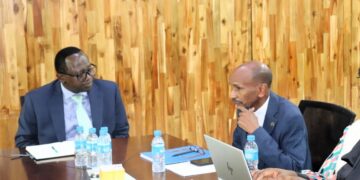
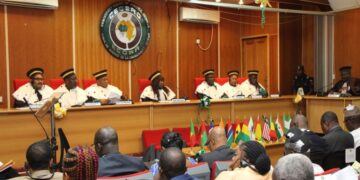



















































Freetown, Sierra Leone – February 9, 2026 – The Community Court of Justice of the Economic Community of West African States (ECOWAS) has commenced a pivotal five-day bilateral engagement in Sierra Leone, aimed at evaluating and enhancing the enforcement of its judicial decisions within the country.
Running from February 9 to 13, this initiative is a key component of ECOWAS’s ongoing 50th anniversary commemorations, underscoring the bloc’s commitment to regional integration, rule of law, and effective implementation of legal frameworks across West Africa.
The engagement seeks to foster deeper collaboration between the ECOWAS Court, Sierra Leone’s Competent National Authority (CNA), and various national stakeholders. According to a statement from the ECOWAS Court, the program will focus on establishing a structured cooperation framework, sharing best practices, and tackling practical obstacles to implementing rulings at the national level. Technical sessions will cover enforcement procedures, institutional coordination, and capacity-building efforts, while a dedicated forum will review the status of outstanding ECOWAS Court judgments in Sierra Leone. Additionally, meetings with Civil Society Organizations (CSOs) are planned to promote inclusive dialogue and collective ownership of solutions.
As part of the visit, the Court delegation will conduct courtesy calls on high-ranking Sierra Leonean officials, including the Ministers of Planning and Development, Foreign Affairs, and Justice; the Chief Justice; the Speaker of Parliament; and the Chairperson of the Human Rights Commission of Sierra Leone.
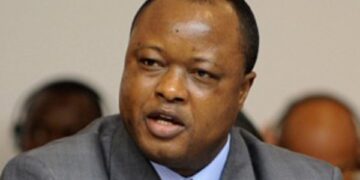
Leading the delegation is Justice Ricardo Cláudio Monteiro Gonçalves, President of the ECOWAS Court, accompanied by Vice President Justice Sengu Mohamed Koroma—a Sierra Leonean jurist—and other senior officials. This high-profile lineup highlights the regional body’s emphasis on strengthening ties with member states.
The timing of this engagement aligns with ECOWAS’s golden jubilee, officially launched on April 22, 2025, in Accra, Ghana, under the theme “Stronger Together for a Brighter Future.” The year-long celebrations, which began with heads of state in attendance, have included events across member states to reflect on 50 years of economic cooperation, peacebuilding, and integration since the organization’s founding in Lagos, Nigeria, in 1975. Key milestones include the 1993 Revised Treaty expanding ECOWAS’s mandate to security and the 2001 Protocol on Democracy and Good Governance. Sierra Leone, a founding member, has played a prominent role in recent years, with President Julius Maada Bio assuming the ECOWAS Chairmanship in June 2025—marking a historic first for the nation—and leading efforts on regional security, including the deployment of the ECOWAS Standby Force.
Enforcement of ECOWAS Court judgments has been a longstanding challenge across the region, with the Court—established in 1991 and granted human rights jurisdiction in 2005—relying on member states to execute decisions via national procedures under Article 24 of its 2005 Supplementary Protocol. In Sierra Leone, recent rulings have spotlighted critical issues: In 2025, the Court mandated the criminalization of female genital mutilation (FGM), urging protections for survivors and prosecutions of perpetrators. Additionally, a 2024 judgment declared Sierra Leone’s loitering laws discriminatory, violating rights to equality and freedom of movement, and ordered their repeal. These cases illustrate the Court’s growing role in addressing human rights abuses, though full compliance often requires enhanced national mechanisms.
This bilateral meeting comes at a time of broader regional momentum for Sierra Leone. In recent weeks, ECOWAS unanimously endorsed the country for a second term on the African Union Peace and Security Council (AUPSC) for 2026–2027, recognizing its contributions to continental stability.
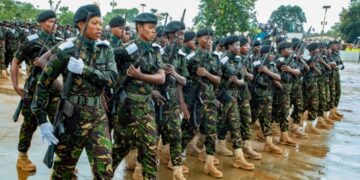
Furthermore, Brigadier General Sheik Sulaiman Massaquoi became the first Sierra Leonean to serve as Chief of Staff of the ECOWAS Standby Force, bolstering the nation’s influence in regional security architecture.
Experts view the engagement as a timely step toward resolving enforcement gaps, potentially setting a model for other member states.
“This initiative not only reinforces the rule of law but also aligns with ECOWAS’s vision of a more integrated and resilient West Africa,” noted a regional analyst. As celebrations continue, the focus on judicial enforcement signals a renewed push for accountability and progress in the bloc’s next chapter.