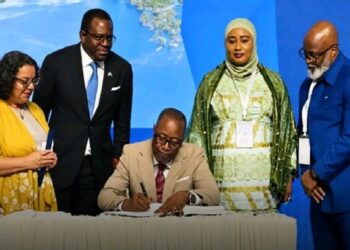

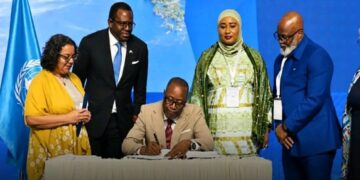

















































Freetown, 11th Novembwer, 2024 (SLENA)-The Economic Community of West Africa States (ECOWAS) and the Network of Electoral Commissions (ECONEC) Symposium and 10th General Assembly commenced on November 11, 2024, at the Radisson Blu Hotel in Freetown, Sierra Leone, focusing on the critical role of Electoral Management Bodies (EMBs) in promoting information integrity, as a vital component in safeguarding electoral processes.
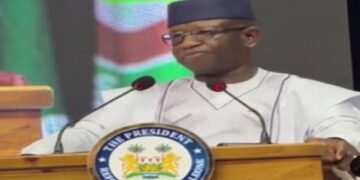
Chief Electoral Commissioner Mohamed Kenewui Konneh made his opened remarks by emphasizing the urgent need for EMBs to navigate the challenges posed by rapid information dissemination, particularly misinformation and election denial.
He noted that while West Africa has made significant strides in democratic governance over the past two decades, skepticism and misinformation remain pervasive threats. “Today, we will explore how EMBs can effectively respond to these challenges and ensure citizens have access to reliable information,” he stated.
Konneh highlighted the importance of understanding the trends affecting information integrity, including the decline in democratic engagement and the rise of misinformation campaigns.
He urged EMBs to embrace their expanded role in not only managing elections but also protecting the integrity of the information ecosystem that supports democracy. “We must ensure voters have access to timely and accurate information, as this is integral to our core functions,” he said.
To address these issues, the Chief Electoral Commissioner outlined three foundational requirements for EMBs: educating citizens about the voting process and its implications, implementing a multi-faceted communication strategy that caters to diverse demographics, and engaging in early and consistent communication to preempt misinformation.
He proposed a two-pronged approach to enhance EMB effectiveness in the digital landscape. First, dedicated teams should be established to monitor social media, fact-check claims, and provide real-time corrections. Second, partnerships with social media platforms can help prioritize verified content and limit the spread of false information.
Konneh also stressed the importance of regular and transparent communication to foster public trust, recommending that EMBs maintain open channels for voter inquiries and create interactive content to clarify electoral processes.
Collaborating with civil society and media organizations can further strengthen the information ecosystem, as these entities often play a crucial role in combating disinformation.
Harouna Moussa, ECOWAS Resident Representative in Sierra Leone, echoed the importance of this forum as a platform for electoral administrators and researchers to address the significant challenges facing democratic institutions in the region. He noted that social media while a powerful tool for information dissemination, also facilitates the spread of disinformation, contributing to electoral interference.
Baidessou Soukolgue, Executive Director of the Electoral Institute for Sustainable Democracy in Africa, praised ECONEC’s commitment to enhancing democracy and highlighted the need for effective communication to build trust in electoral processes.
He pointed to recent experiences in Liberia as a successful example of maintaining public confidence through engagement.
Madam Josephine Kamara, Managing Director of the Sierra Leone Broadcasting Corporation, emphasized the unique challenges EMBs face in the digital age. She stressed the importance of clear protocols and well-trained staff to combat misinformation and build trust in electoral processes.
The symposium aims to develop strategies that empower EMBs to serve as impartial arbiters and strengthen democracy in West Africa amid the evolving digital landscape.
Source: SLENA