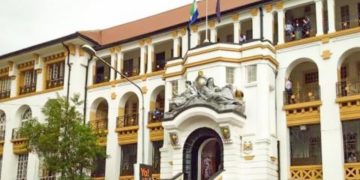

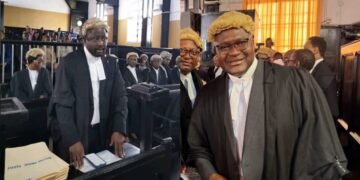
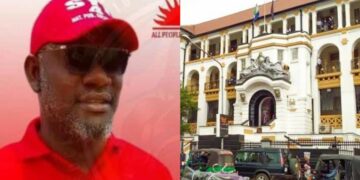



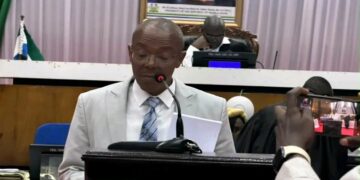








































FREETOWN, 20 October 2026 – The Supreme Court of Sierra Leone has directed all lawyers in the three cases challenging the Constitution of Sierra Leone (Amendment) Bill, 2025 to appear before Chief Justice Komba Kamanda in his chambers today, Tuesday 20 October, in a closed-door session with no live broadcast and no media invited.
The decision marks a major shift from the Court’s earlier approach of transparency. Since the cases were filed in August, hearings – including the consolidation of the cases on 8 October and the contempt proceedings against former Attorney-General Joseph Fitzgerald Kamara (JFK) – were broadcast live on SLBC and the Judiciary’s Facebook page, attracting thousands of viewers.
This time, the notice says, the hearing will not be broadcast live and the media have not been invited.
What is on the agenda?
Reports and court filings indicate the closed session will address the Government’s preliminary objection filed last Thursday, 16 October, by the Law Officers’ Department.
In that Notice of Motion, supported by an affidavit of Senior State Counsel Joseph Sesay, the State asks the Court to throw out the three consolidated cases.
The Government argues:
1. Section 94(2) – Parliament privilege: The Constitution stops courts from enquiring into proceedings in Parliament. The State says this covers Speaker Segepoh Solomon Thomas’s ruling on 10 August that a simple majority was enough to pass clause-by-clause votes.
2. Section 48(4) – Presidential immunity: The President cannot be sued or restrained while in office. The State argues the cases effectively seek to stop President Julius Maada Bio from assenting to the Bill.
3. Prematurity: The Bill is not yet law because the President has not signed it. The Court should therefore not review it.
4. Wrong jurisdiction: Section 127 does not allow challenge to Parliament’s internal procedure.
The State also wants all further steps in the cases paused until this motion is decided.
Why the shift matters
The three cases – filed by opposition MPs, the APC Party, and citizens including Andrew Keili – centre on whether Parliament met the mandatory two-thirds requirement under Section 108(4). With 149 MPs, the Constitution requires at least 100 votes to amend the Constitution. On 10 August, after APC MPs walked out, Parliament recorded about 96-97 “yes” votes but declared the Bill passed.
The Bill would change the rules for the 2028 elections, including lowering the threshold to win the presidency in the first round from 55% to 50% plus one, and revising the proportional representation system for MPs.
Until now, the Supreme Court had embraced openness. Chief Justice Kamanda allowed live broadcast and on 8 October admitted the Institute for Legal Research and Advocacy for Justice (ILRAJ) as amicus curiae to assist the Court.
Legal observers say moving to chambers may be procedural – preliminary objections on jurisdiction are often heard in chambers – but it raises concerns about public access to a case that determines how the Constitution can be amended.
If the State’s motion succeeds, the three contested cases will end, leaving only President Bio’s own Reference of 15 September – in which he asked the same Supreme Court for advisory opinion on the two-thirds question before he decides to assent – as the only vehicle. In that Reference, challengers are not full parties.
If the motion fails, the Court is expected to set dates for full written submissions and live hearing on the substantive question: Did 96 votes amend the Constitution?
All parties have been ordered to appear before the Chief Justice today. A decision on whether to grant a stay of proceedings is expected after that meeting.