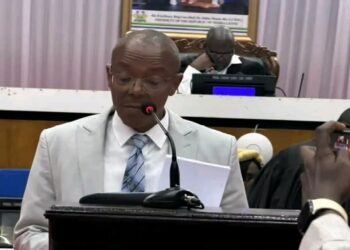


























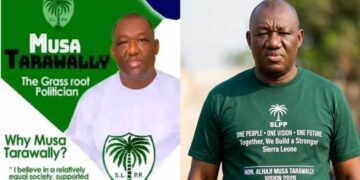
































The Court of Appeal in Freetown has dismissed the appeal filed by convicted politician Mohamed Kamarainba Mansaray and has ordered his immediate arrest.
The court also reaffirmed the arrest warrant previously issued for his surety, Aisha Mansaray.
The ruling was delivered on Monday, 10th November 2025.
The case was heard before a panel led by Hon. Justice A.M. Bangurah (Justice of the Supreme Court), sitting with Hon. Justice T. Barnett and Hon. Justice A.S. Allieu.
According to the official court order, neither Kamarainba nor his legal representatives appeared in court for the appeal proceedings, nor did they submit any form of communication explaining their absence.
The Appeal, which was filed on 15th March 2023, had gone through several adjournments. However, the court noted a continuous pattern of non-attendance on the part of the appellant and his counsel. The court concluded that the matter could not be allowed to stall indefinitely.
Citing Rule 53 (6) of the Court of Appeal Rules (1985), the judges moved to dismiss the appeal on the grounds of “want of prosecution,” meaning the appellant failed to actively pursue the case.
As part of the ruling, the court issued a fresh bench warrant for the arrest of Mohamed Kamarainba Mansaray.
The warrant previously issued against his surety, Aisha Mansaray—who had guaranteed his bail—also remains in full effect.
The ruling reinforces the judiciary’s position on compliance with court procedures and its intolerance for attempts to delay or evade the judicial process.
Kamarainba, a former presidential candidate and leader of the Alliance Democratic Party (ADP), was convicted in connection with a sexual offense case that generated significant national attention. His legal battles since conviction have drawn strong public interest, with supporters claiming political targeting, while others insist the law must take its course.
The judiciary has not yet disclosed the next steps regarding enforcement of the arrest orders. However, with both warrants now reaffirmed, security agencies are expected to move accordingly.
The case continues to attract national debate, especially as it touches on issues of justice administration, political accountability, and the responsibility of public figures to comply with the legal process.