

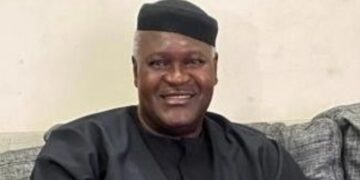

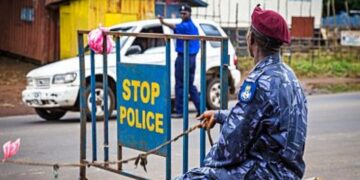


















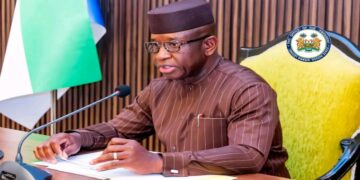























Chief Minister David Moinina Sengeh has dismissed allegations portraying Sierra Leone as a hub for international drug trafficking, insisting that the government remains committed to tackling transnational organised crime and strengthening border security.
Speaking in a video shared on social media from a location overlooking the Freetown Harbour, Dr. Sengeh outlined measures being implemented by the government to monitor and intercept illicit substances and contraband entering the country through its ports.
According to the Chief Minister, trade activities at the country’s main seaport have expanded significantly in recent years, with authorities simultaneously increasing efforts to detect and seize illegal shipments.
“We have increased the volume of containers at the port by over 150 percent in actual trade, and during that period we have continued to track and intercept containers carrying contraband and drugs,” he said.
Questions have also persisted over reports concerning the alleged presence in Sierra Leone of Dutch fugitive drug trafficker Jos Leijdekkers, one of Europe’s most wanted criminals. Leijdekkers was sentenced in absentia to 24 years imprisonment by a Dutch court in 2024. However, Sierra Leonean authorities have repeatedly denied claims that he is residing in the country.
Addressing the criticism, Dr. Sengeh argued that Sierra Leone faces unique challenges as a developing nation with limited maritime and security resources.
“We are a country trying to use every available resource to improve the lives of our people. We do not have extensive naval assets to patrol all our waters, but we continue to do our best to secure our borders,” he stated.
The Chief Minister also criticised what he described as unfair international narratives that portray Sierra Leone as a centre for organised crime based on allegations and isolated incidents.
He maintained that countries which record major drug seizures are not automatically branded as “narco-states,” and argued that Sierra Leone should be afforded the same consideration.
Dr. Sengeh noted that authorities have intercepted illicit drugs originating from several countries, including the Netherlands, India and the United Kingdom, yet those nations are not characterised by the actions of criminal networks operating across borders.
Reaffirming the government’s position, he stressed that Sierra Leone would continue to cooperate with international partners while safeguarding its national interests.
“Sierra Leone will respect its national laws, maintain its bilateral relationships and uphold international law,” he said, adding that the country seeks partnerships based on mutual respect, information sharing and equal treatment.
The Chief Minister further reiterated his previous rejection of descriptions of Sierra Leone as a “narco-state,” arguing that such labels ignore the global nature of drug trafficking and the efforts being made by local authorities to combat the problem.
He also highlighted the devastating impact of the Kush drug epidemic on communities across the country, calling for collective action to address substance abuse and organised crime.
“We are working every day to fight transnational organised crime, secure our borders and ensure that the priorities of our people remain at the centre of our national agenda,” Dr. Sengeh said.
His comments come amid heightened international attention following a series of high-profile drug seizures linked to Sierra Leone.
Just last month, Spanish authorities reportedly intercepted a vessel carrying approximately 30 tonnes of cocaine valued at around $700 million after it departed from Freetown en route to the Mediterranean. The seizure sparked criticism from opposition figures, who raised concerns about possible links between Sierra Leone and international drug trafficking networks.