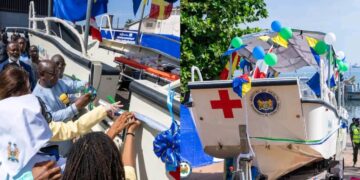






























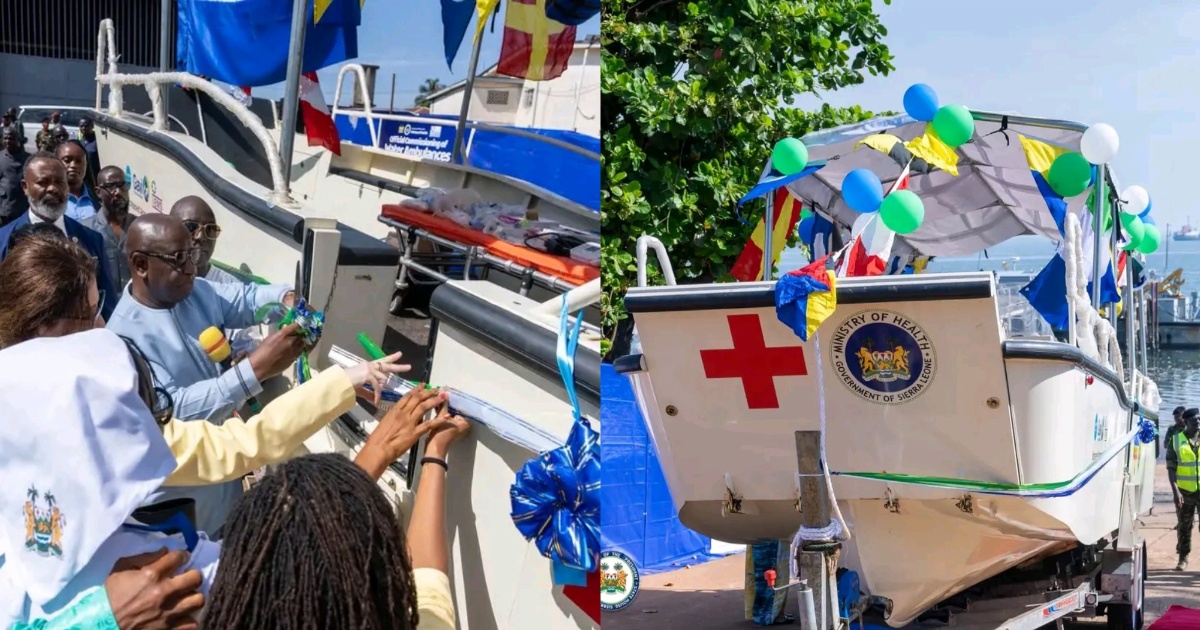
Freetown, 20 November 2026 – President Julius Maada Bio on Friday commissioned eight government-owned sea ambulances at the Sierra Leone Naval Base in Murray Town, marking a significant step in expanding emergency healthcare to the country’s hard-to-reach riverine, coastal and island communities.
The motorized boats, procured through the Ministry of Health with support from UNICEF Sierra Leone and funding from Gavi, the Vaccine Alliance, are the first of their kind owned by the government. They are designed to deliver rapid medical assistance on water, facilitate emergency referrals, and improve access for patients cut off by distance, poor road networks or difficult river crossings.
“These water ambulances will improve referrals and save lives in communities that are difficult to reach,” President Bio said.
He described the commissioning as a major milestone in delivering quality healthcare to island and riverine populations, adding that the government’s comprehensive approach to strengthening the health system is already yielding results.
The eight boats will be crewed by 24 trained operators and linked to the national emergency number 117.
Officials noted that in the past, a mother experiencing life-threatening bleeding after childbirth on the islands often had to wait for a canoe and favourable tides. Help is now expected to be a phone call away.
Minister of Health Dr Austin Demby said the initiative forms part of President Bio’s broader agenda to make healthcare accessible to every Sierra Leonean, regardless of location.
“This demonstrates that everyone, irrespective of their geographical location, will get access to health,” he stated.
Dr Demby added that the boats complement the government’s Triple Zero initiative, which aims to eliminate preventable maternal deaths, preventable child deaths, and ensure no child remains unvaccinated.
Deputy Minister of Health II Dr Jalikatu Mustapha emphasised equity in service delivery.
“This move shows that everyone, irrespective of gender, class, socio-economic status and geographical location, will get access to emergency medical healthcare,” she said.
The commissioning coincides with the launch of the Hepatitis B birth-dose vaccine, further underscoring efforts to protect mothers and newborns. UNICEF noted that the boats will also help bring vaccines and primary healthcare closer to children and families in remote riverine areas.
Riverine and island communities, particularly in districts such as Bonthe and other coastal areas, have long faced barriers to timely care. Challenges include dependence on tides, limited road infrastructure, and the high cost or unavailability of transport during medical emergencies. The new fleet is expected to strengthen the National Emergency Medical Services (NEMS) referral system and support ongoing gains under the Triple Zero campaign, which has already recorded reductions in maternal and child mortality through intensified monitoring, accountability and community engagement.
Health authorities say the sea ambulances represent a practical response to Sierra Leone’s unique geography and a concrete step toward ensuring that no community is left behind in the drive for universal health coverage.