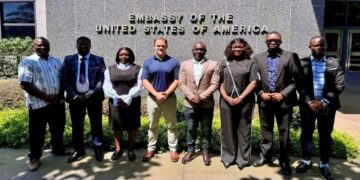




































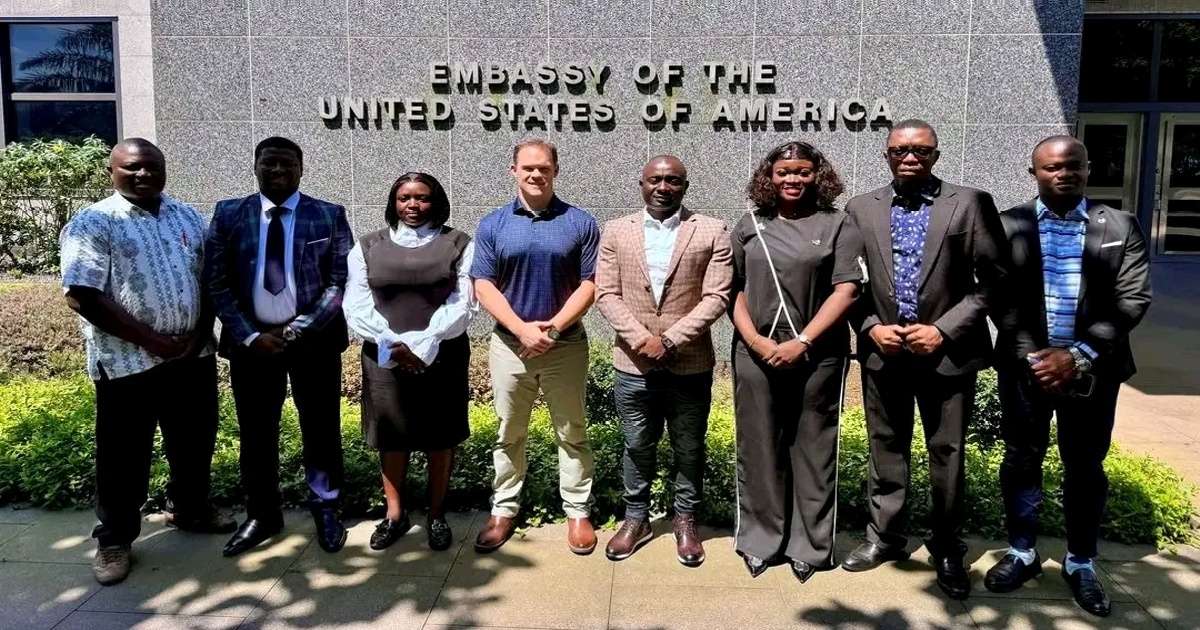
Freetown – Five Sierra Leonean law enforcement officers have successfully completed a specialised United States-funded training programme led by the US Drug Enforcement Administration (DEA) in Botswana, boosting the country’s ability to fight drug trafficking and transnational organised crime.
The officers gained practical skills in investigation, operational planning and disrupting cross-border criminal networks. The programme forms part of ongoing American support for Sierra Leone’s security institutions, aimed at equipping local forces to tackle emerging threats more effectively.
The training took place at the International Law Enforcement Academy (ILEA) in Gaborone, a joint US-Botswana facility that has trained thousands of African officers since 2000. It focuses on real-world techniques for identifying and dismantling drug networks that increasingly use West Africa as a transit and distribution hub for cocaine and other narcotics moving from South America towards Europe.
For Sierra Leone, the timing is significant. The country continues to battle the devastating impact of kush, a highly addictive synthetic drug that has ravaged communities, especially among young people.
Authorities, through the Transnational Organised Crime Unit (TOCU), have recorded dozens of convictions in recent operations targeting kush distribution networks across the Western Area, Kenema, Port Loko, Bo and other regions, with some traffickers receiving lengthy prison sentences of up to 40 years.
Cocaine trafficking remains a serious concern, with Sierra Leone’s ports and coastline vulnerable to maritime routes used by international cartels. Strengthening specialised investigative capacity helps officers better detect concealment methods, conduct controlled deliveries, coordinate with regional partners and build stronger cases for prosecution.
US Embassy Freetown described the initiative as an investment that enhances the safety of both Sierra Leoneans and Americans.
Officials noted that more capable local law enforcement reduces the space for criminal networks that threaten communities on both sides of the Atlantic.
This latest training builds on previous US-supported programmes that have sent Sierra Leonean officers to ILEA Gaborone for courses in intelligence analysis and other specialised skills. Such capacity-building efforts support national priorities, including the work of the National Drug Law Enforcement Agency and inter-agency coordination under TOCU.
International cooperation remains essential. Criminal networks operate across borders, and shared training helps Sierra Leonean officers exchange best practices with counterparts from other African countries while accessing modern tools and techniques. As one of several ongoing partnerships, the programme underscores the shared interest in disrupting illicit drug flows that fuel addiction, violence and corruption.
The five officers are expected to apply their new skills in ongoing operations, contributing to stronger enforcement, better intelligence-led policing and improved protection for Sierra Leonean communities.