







































The Sierra Leone Association of Journalists (SLAJ) has reiterated its position that the Supreme Court should provide constitutional interpretation on the issues arising from the ongoing constitutional review process, describing the matter as one of national interest requiring the intervention of the country’s highest court.
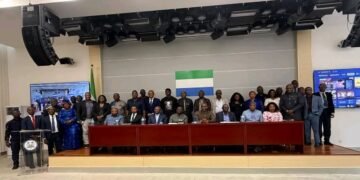
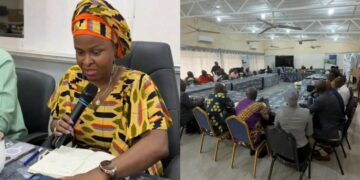
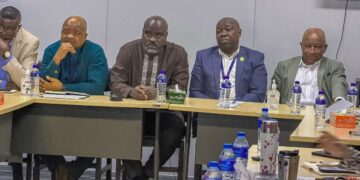
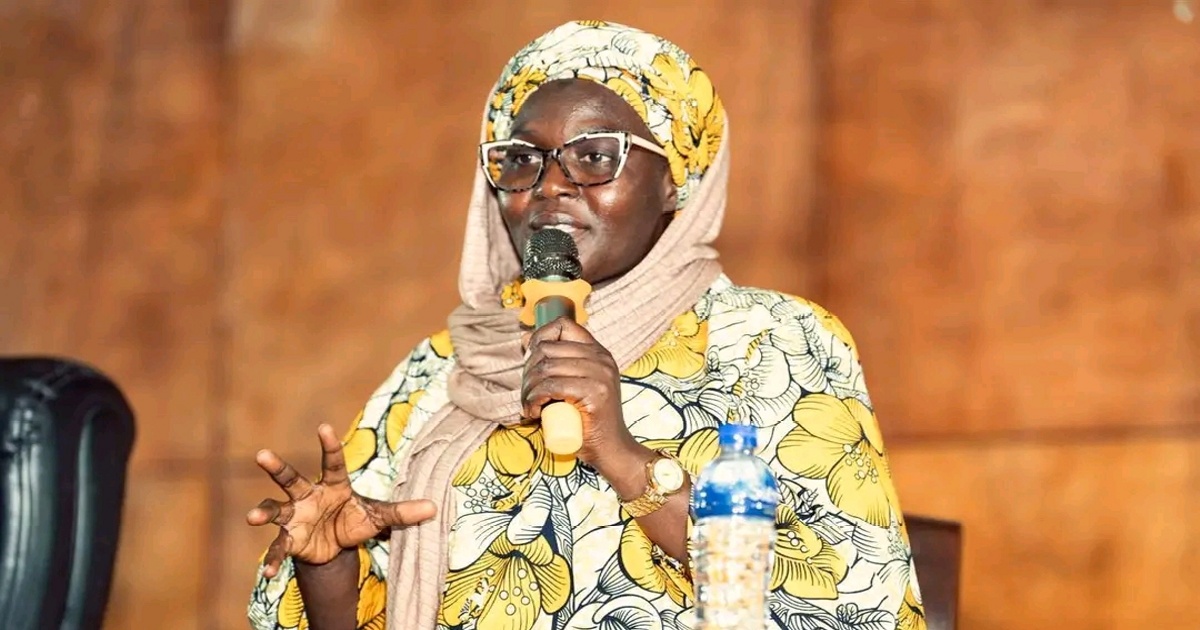
Speaking on the constitutional review process, at the MOICE press Conference on Tuesday 18th August 2026, Umu Bakar, SLAJ Public Relations Officer said the association supports the decision of the Speaker of Parliament to seek guidance from the Supreme Court on the matter.
“Our position has been very clear: we are neither for nor against. We support the decision of the Speaker of Parliament to consult the Supreme Court for interpretation,” Bakar said.
She noted that the Constitution is the supreme legal framework governing the country and argued that the Supreme Court is the appropriate institution to determine the constitutional questions arising from the parliamentary process.
“We believe that the Supreme Court should look into these issues because what we are dealing with is a matter of national interest,” she said, adding that whatever decision the Court reaches should be respected by Sierra Leoneans.
Bakar further emphasised the role of the media in helping citizens understand the constitutional review process, particularly as many members of the public may not have the opportunity to follow parliamentary proceedings or court processes directly.
She said journalists have a responsibility to translate complex constitutional and legal issues into language that ordinary citizens can understand, stressing that the media’s role goes beyond simply reporting events.
“We have a responsibility to Sierra Leone. We know that, as media people, we are the voice of the voiceless,” she stated.
According to Bakar, SLAJ and individual media houses have closely followed the constitutional review process because of the national implications of the issues under consideration. She said accurate and accessible reporting would be critical to ensuring that citizens understand what is happening in Parliament and, subsequently, before the courts.
She also stressed that the constitutional review should ultimately produce a Constitution that reflects the aspirations and concerns of ordinary Sierra Leoneans.
“We want to see a Constitution that reflects Sierra Leoneans; a Constitution that reflects on the things that will help the country to grow,” Bakar said.
She pointed to ordinary citizens, including market women, farmers, fishermen and other communities across the country, saying they should be able to see their concerns reflected in the country’s supreme law.
Bakar also raised the issue of public confidence in the judiciary, describing the current constitutional matter as an opportunity to strengthen citizens’ trust in Sierra Leone’s judicial system.
She said a clear and credible determination by the Supreme Court could demonstrate the importance of the judiciary in interpreting laws and resolving constitutional questions.
“I think this can be a test case for Sierra Leoneans to regain trust in the judicial system because, at the end of the day, the courts interpret the laws for us,” she said.
The SLAJ PRO maintained that journalists would continue to provide accurate and responsible information as the constitutional process unfolds, noting that many citizens depend primarily on radio and other media platforms to understand national developments.
She urged political actors to place the national interest above political differences, arguing that constitutional reform should serve the interests of Sierra Leoneans rather than particular political or institutional interests.
“The Constitution and the laws we hope to review should serve the national interest and should not be used to favour particular interests,” Bakar said.