
























































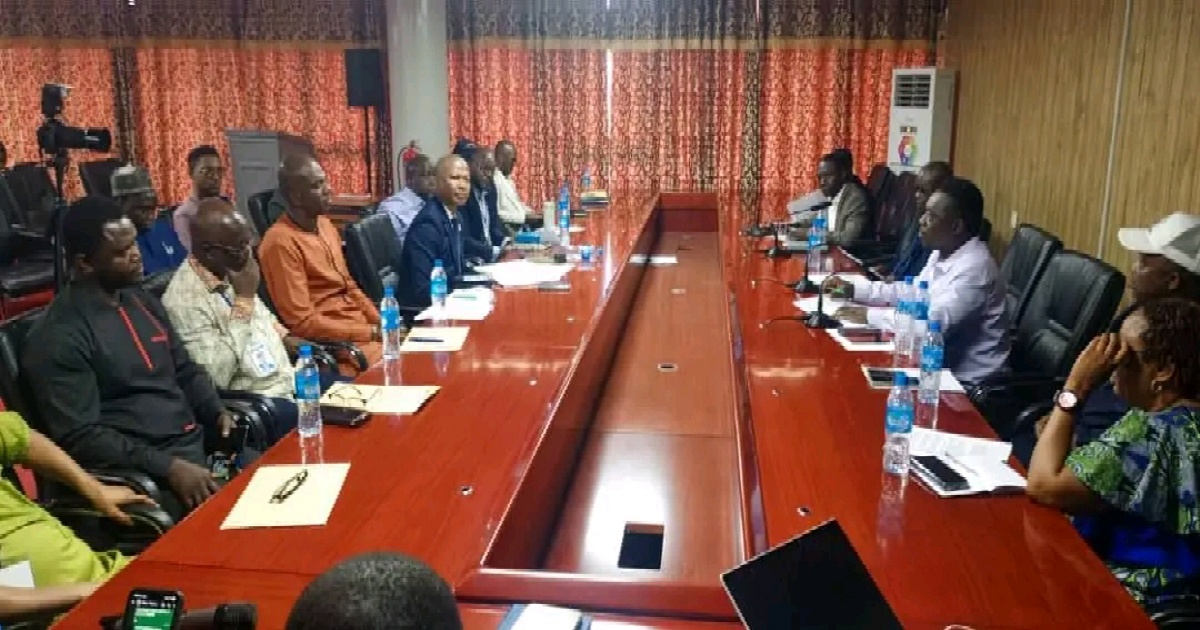
Freetown – Parliament’s Committee on Trade and Industry has put officials of the National Petroleum Regulatory Authority (NPRA) under the spotlight, seeking answers on how fuel prices are set and whether proper standards are being enforced across the petroleum sector.
The engagement, which also involved Oil Marketing Companies (OMCs), forms part of the committee’s oversight duties. Members of Parliament pressed the NPRA to explain the full process of determining pump prices, the main factors driving costs, and steps being taken to promote transparency and protect ordinary Sierra Leoneans from unfair practices.
In his presentation, NPRA Director General Brima Baluwa Koroma outlined the Authority’s mandate under the National Petroleum Regulatory Authority Act, 2025.
He stressed that the regulator must carefully balance the needs of three key groups: consumers who want affordable and quality fuel, industry operators who need reasonable returns on their investments, and the Government which relies on sustainable revenue from the sector.
Koroma assured the committee that protecting consumers through fair pricing remains the top priority, while also creating an environment attractive for both local and foreign investment.
Responding to questions about the quality of imported petroleum products, the Director General said all fuel entering Sierra Leone meets internationally accepted standards.
He noted that modern fuels contain additives that enhance engine performance and include environmentally friendly components that help reduce harmful emissions.
Koroma revealed that the NPRA will hold discussions with the United Nations Environment Programme (UNEP) in August on fuel quality and vehicle emissions. He extended an invitation for one or two members of the Parliamentary Committee to join the engagement.
On regional standards, he explained that ECOWAS has moved from a 1,000 parts per million (ppm) sulphur limit to a stricter 50 ppm to better protect public health and the environment. Sierra Leone, he said, is already doing better by allowing imports with just 10 ppm sulphur content.
The DG commended the Ministry of Finance for securing a Platts subscription for the NPRA in 2020. Before that, the Authority had to rely on information provided by Oil Marketing Companies when setting prices.
“The independent data source has significantly improved transparency in price determination,” he added.
He also praised the OMCs for consistently supplying high-quality petroleum products to the Sierra Leonean market.
On the regulation of fuel stations, Koroma disclosed that the NPRA has placed a moratorium on new filling station constructions since March this year. The Authority is currently reviewing all pending applications to ensure they meet strict safety and environmental requirements. Some may be approved, while others could be rejected to safeguard public safety.
He shared copies of the NPRA’s Gas Station Regulations with Members of Parliament and urged them to help sensitise communities about the dangers of building filling stations near schools, hospitals, markets, and other public places.
The parliamentary committee emphasised the need for stronger transparency and accountability in the sector so that Sierra Leoneans can have access to quality fuel at reasonable prices. The engagement is seen as part of broader efforts to ensure the petroleum industry serves the best interests of the country and its citizens.
This development comes amid continued public concern over fuel prices and the desire for a more efficient and trustworthy regulatory system in Sierra Leone’s downstream petroleum sector.