

















































Freetown, Sierra Leone – Sierra Leone has reaffirmed that the death penalty is gone for good, with the Government declaring that no citizen will ever again face capital punishment under the country’s laws.
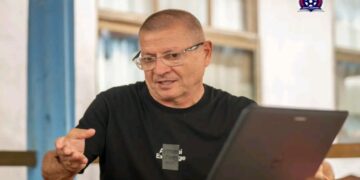
Attorney General and Minister of Justice Alpha Sesay made the declaration while addressing delegates at the opening of the 9th World Congress Against the Death Penalty in Paris, France. He said Sierra Leone’s abolition of capital punishment is now “absolute, irreversible and grounded in principle.”
Representing President Julius Maada Bio and the Government of Sierra Leone, the Attorney General said the country’s presence at the global congress demonstrates its continued commitment to human rights, justice and democratic governance.
Sesay recalled that Sierra Leone abolished the death penalty through the Abolition of the Death Penalty Act, 2021, describing the reform as one of the country’s most significant human rights achievements in recent years.
He noted that the government’s commitment was put to the test after an attempted overthrow of the government, when calls emerged for the return of capital punishment. However, President Bio refused to reverse the policy, insisting that justice should be guided by constitutional principles rather than public pressure or political circumstances.
The Attorney General further announced that Parliament ratified the Second Optional Protocol to the International Covenant on Civil and Political Rights (ICCPR) on 9 June 2026.
He said the instrument of accession was signed on 24 June by the Minister of Foreign Affairs and International Cooperation before being deposited with the United Nations.
According to Sesay, the ratification means Sierra Leone has now legally abolished the death penalty under both domestic and international law, making its return virtually impossible.
He explained that the move ensures that constitutional provisions relating to capital punishment can no longer be enforced, while the country’s proposed new Constitution is expected to further entrench the abolition. He added that Sierra Leone has joined a growing number of African nations that have permanently removed the death penalty from their justice systems.
Reflecting on the country’s past, Sesay observed that Sierra Leone opposed the international treaty when it was first introduced in 1989 but has since embraced a different path.
He urged countries that still retain the death penalty to ratify the protocol, saying the decision represents “a gain in humanity” rather than a surrender of national sovereignty.
The Attorney General concluded by reaffirming Sierra Leone’s support for the global campaign to end capital punishment everywhere.
The 9th World Congress Against the Death Penalty was held in Paris from 30 June to 2 July 2026 and brought together government officials, legal experts, civil society organisations and human rights advocates from around the world to discuss strategies for ending the use of capital punishment.
Sierra Leone’s delegation included Deputy Minister of Foreign Affairs and International Cooperation Frances Piagie Alghali, Ambassador to France Dr. Mohamed Kanja Sesay, Deputy Ambassador Mamadi Gobeh Kamara, Minister Plenipotentiary Samuel Kargbo, and Patrick Hassan Morlai Koroma, Director of Legal, Economic and Technical Cooperation at the Ministry of Foreign Affairs and International Cooperation.