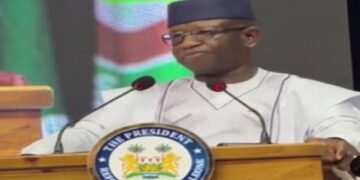
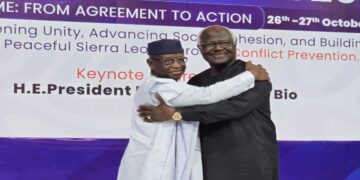
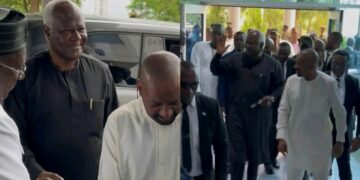
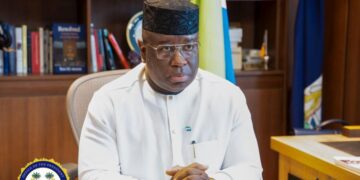






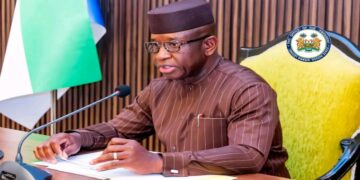
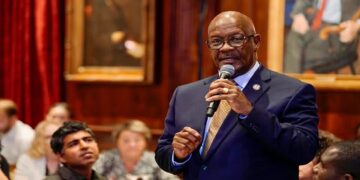












Conakry, Guinea – January 17, 2026 – Sierra Leone’s President Julius Maada Bio arrived in Conakry today to attend the inauguration of Guinea’s recently elected president, General Mamady Doumbouya, marking a significant moment in West African diplomacy and the region’s push toward democratic transitions.
In a statement shared on social media, President Bio emphasized his dual role in the visit: “As Chairman of the ECOWAS Authority and President of the Republic of Sierra Leone, I have arrived in Conakry to attend the inauguration of General Mamady Doumbouya, following the presidential election held on 28 December 2025, and the proclamation of the final results by the Supreme Court on 4 January 2026.”
The ceremony, held at the General Lansana Conté Stadium in Nongo, has drawn several African heads of state, including Nigeria’s Vice President Kashim Shettima representing President Bola Tinubu, Mali’s Transitional President Assimi Goïta, Rwanda’s President Paul Kagame, and Gambia’s President Adama Barrow, underscoring the event’s regional importance.
Doumbouya’s inauguration follows his landslide victory in Guinea’s first presidential election since a 2021 military coup that ousted longtime leader Alpha Condé. Provisional results announced by the General Directorate of Elections on December 30, 2025, showed Doumbouya securing 86.72% of the vote, over 4.5 million ballots, while his closest rival, former minister Abdoulaye Yéro Baldé, garnered just 6.59%. The Supreme Court validated these results on January 4, 2026, paving the way for Doumbouya’s seven-year term under a new constitution.
The election, held on December 28, 2025, was intended to restore civilian rule after four years of military transition, but it faced criticism from opposition groups and international observers, including the United Nations, over allegations of a tightly controlled political environment. Key opponents were barred from running, and Doumbouya had initially pledged not to seek office, a promise he later reversed.
The vote’s outcome has been described as a “cementing” of Doumbouya’s rule in the resource-rich nation, known for its vast bauxite and iron ore reserves. Analysts note that a weakened opposition contributed to the lopsided results, with calls for broader political inclusion and democratic reforms now looming over the new administration. Despite the controversies, the election represents a step toward stability in Guinea, which has endured years of political upheaval.
President Bio’s attendance highlights the deep-rooted ties between Sierra Leone and Guinea, two neighboring West African nations with a shared history of cooperation and occasional tensions. Both countries gained independence in the late colonial era, Guinea in 1958 from France and Sierra Leone in 1961 from Britain—l, and their borders were shaped by 19th- and early 20th-century negotiations between European powers. Early post-independence relations were strained amid Cold War dynamics, but they have since evolved into a fraternal partnership.
Within the Economic Community of West African States (ECOWAS), both countries have collaborated on peacekeeping efforts, including in Liberia and Guinea-Bissau, reflecting their commitment to regional stability. Bio’s role as ECOWAS Chairman further amplifies Sierra Leone’s influence in promoting constitutional order across the sub-region, aligning with Nigeria’s Renewed Hope agenda and broader African Union goals.
As Doumbouya begins his term, observers will watch how Guinea addresses economic challenges and political reforms, while the Bio-Doumbouya meeting could signal renewed efforts to resolve outstanding bilateral issues and enhance cooperation.