











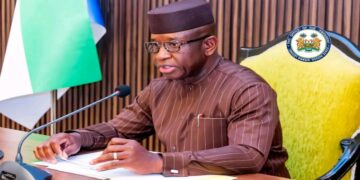



















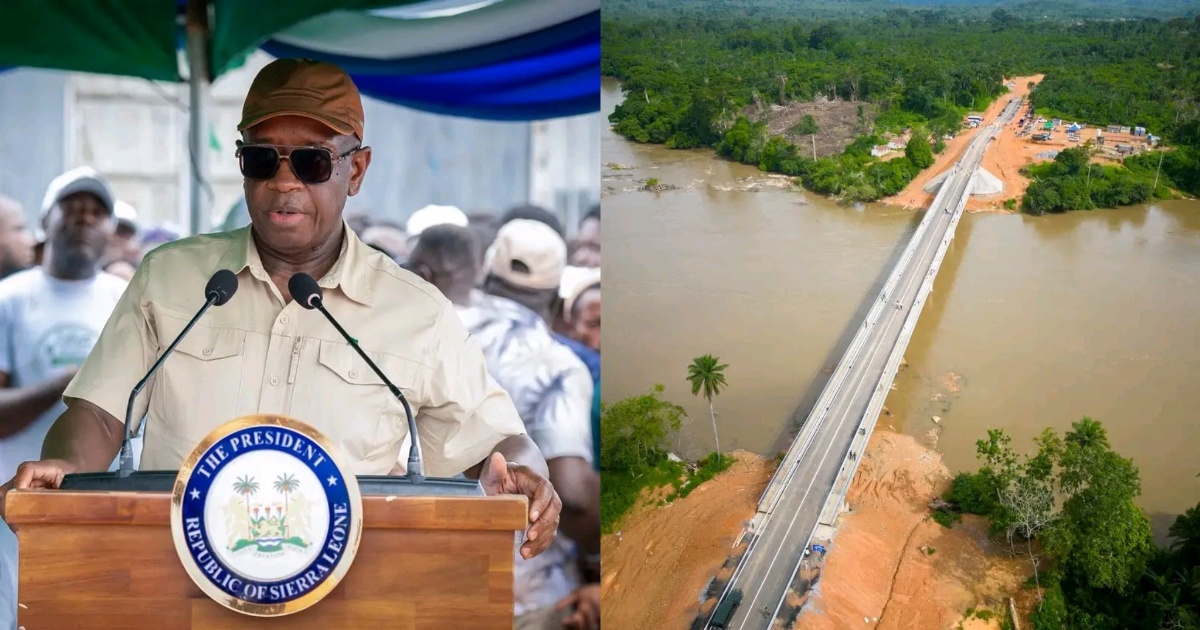
Pendembu, Kailahun District – President Dr. Julius Maada Bio on Saturday officially commissioned the Manowa River Bridge in Peje West Chiefdom, describing the project as a significant milestone in his administration’s efforts to expand infrastructure to rural communities and end reliance on dangerous and inefficient ferry crossings.
The bridge, constructed over the Moa River to link Manowa and Pendembu, replaces a long-standing manual cable ferry system that posed safety risks and limited year-round access, particularly during the rainy season. Funded through a World Bank-supported programme under the Smallholder Commercialization and Agribusiness Development Project (SCADeP), the facility is expected to dramatically improve transportation, reduce travel times, and facilitate the movement of goods and people across Kailahun District, one of Sierra Leone’s key agricultural regions.
President Bio highlighted that four out of six planned bridges under the initiative have now been completed, with construction on the remaining two progressing.
He emphasized the project’s alignment with broader national goals of economic transformation and rural development.
Speaking at the event, Minister of Agriculture Dr. Henry Musa Kpaka noted that the bridge will enable farmers to transport produce more efficiently to markets, minimizing post-harvest losses and directly supporting the government’s flagship Feed Salone Initiative.
Launched in 2023, Feed Salone aims to achieve food self-sufficiency, reduce import dependency, boost export earnings (particularly in value chains like horticulture, cocoa, and cashew), create jobs, especially for women and youth, and build a resilient, commercial agricultural sector as part of the Medium-Term National Development Plan 2024–2030.
World Bank Country Manager Abdul Muwonge praised the timely completion of the bridge while calling on contractors to avoid delays that inflate costs.
He underscored the project’s importance for smallholder farmers and regional trade. Similar World Bank-backed bridges, such as the Gendema Bridge over the Sewa River commissioned in late 2025, have already demonstrated transformative impacts by replacing unreliable ferries with safe, all-weather crossings that enhance market access and economic opportunities.
Local residents and traditional leaders welcomed the development with optimism, viewing it as a catalyst for economic growth, improved access to services like healthcare and education, and stronger connectivity within Kailahun District and potentially with neighboring areas. The bridge is anticipated to benefit thousands of farmers by enabling faster and safer transport of crops, livestock, and other goods.
This commissioning forms part of President Bio’s ongoing infrastructure push, which has included several other rural bridges and road projects aimed at unlocking agricultural potential and fostering private sector involvement in food production.
The Manowa Bridge stands as another concrete step toward modernizing Sierra Leone’s rural transport network and advancing the Feed Salone vision of national food sovereignty.