




























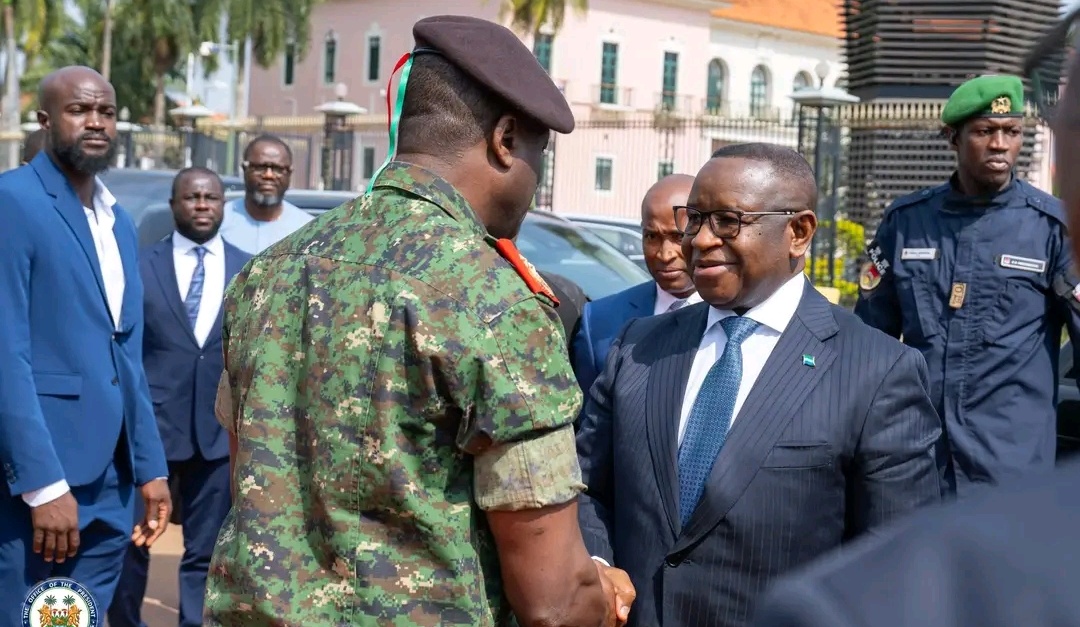
Bissau, Guinea-Bissau – December 1, 2025 – In a bold escalation of diplomatic efforts to avert further instability in West Africa, Sierra Leone’s President Julius Maada Bio, the current chair of the Economic Community of West African States (ECOWAS), landed in the capital Bissau today for direct negotiations with the military junta that overthrew President Umaro Sissoco Embaló just days after the nation’s contentious November 23 elections.
The visit comes amid heightened tensions in the fragile coastal nation, where a mutinous faction of the armed forces, led by self-proclaimed transitional head General Horta N’Tam, seized power on November 26, suspending the electoral process, sealing borders, and detaining Embaló along with several top officials. The junta, citing rampant corruption and narcotrafficking as justifications, has vowed to combat drug cartels that it accuses of infiltrating the country’s institutions, including attempts to “capture Guinea-Bissau’s democracy.”
However, the move has drawn swift international rebuke, with the junta imposing a ban on all demonstrations, strikes, and activities deemed threats to public order.
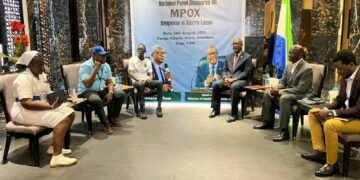
Bio’s arrival marks the launch of a high-level ECOWAS mediation mission, mandated just days ago during an extraordinary virtual summit he chaired on November 27. At that emergency gathering of regional heads of state, including Senegal’s Bassirou Diomaye Faye, Togo’s Faure Gnassingbé, and Cabo Verde’s José Maria Neves, the bloc “unequivocally condemned” the coup as a “grave violation” of Guinea-Bissau’s constitutional order and a direct threat to regional stability.
The leaders suspended Guinea-Bissau from all ECOWAS decision-making bodies until “full and effective constitutional order” is restored, in line with the bloc’s 2001 Protocol on Democracy and Good Governance.
They also demanded the immediate release of Embaló—who was safely evacuated to neighboring Senegal on November 27 following personal intervention by Bio—and other detainees, while urging the military to return to barracks and allow the national election commission to certify results.
“This is not just about Guinea-Bissau; it’s about the soul of our democracy,” Bio declared during the summit, warning that ECOWAS would pursue “firm, principled, and consistent” actions, potentially including targeted sanctions against coup perpetrators.
In a video statement posted on X, Bio reiterated the bloc’s zero-tolerance stance on unconstitutional power grabs, emphasizing that the detention of Embaló and electoral officials “violates ECOWAS Treaty principles.”
Guinea-Bissau’s latest upheaval fits a grim pattern for the former Portuguese colony, which has endured four successful coups and multiple failed attempts since gaining independence in 1974.
The November 23 polls, pitting Embaló, widely expected to secure a second term, against opposition rival Fernando Dias of the Social Renewal Party, were marred by mutual claims of victory and fraud allegations even before the junta’s intervention.
Analysts attribute the instability to deeply weakened state institutions, exacerbated by years of political infighting and the narcotics trade that has turned the archipelago into a notorious transit hub for South American cocaine bound for Europe.
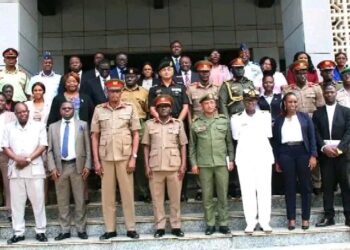
Bio’s delegation, which includes ECOWAS Commission President Omar Touray and representatives from the Stabilisation Support Mission (ESSMGB), tasked with safeguarding key institutions is set to convene urgently with junta leaders, political stakeholders, security chiefs, and international observers.
The African Union (AU) has echoed ECOWAS’s condemnation, with its chairperson joining calls for restraint and dialogue, while UN Secretary-General António Guterres held direct talks with Bio on November 28 to coordinate global support for a peaceful resolution.
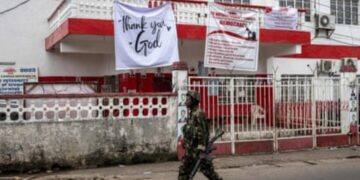
As checkpoints manned by presidential guard units dotted Bissau’s streets and sporadic gunfire echoed in the immediate aftermath of the takeover, life has tentatively returned to normalcy, with markets and transport resuming operations.
Yet, the stakes remain high: ECOWAS, formed in 1975 to foster economic integration but increasingly focused on security, faces a delicate balancing act amid a wave of regional coups—from Mali to Niger—that have tested its authority.