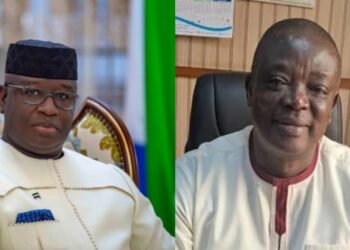
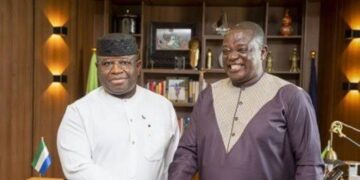
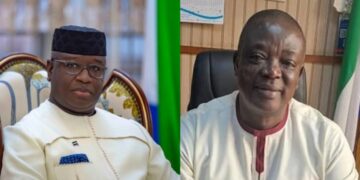

























































Freetown, Sierra Leone – February 20, 2026 – In a move aimed at strengthening the nation’s electoral framework, President Brigadier General (Retired) Julius Maada Bio has announced the appointment of Mr. Edmond Sylvester Alpha as the Chief Electoral Commissioner and Chairman of the Electoral Commission of Sierra Leone (ECSL).
The official public notice, issued from State House today, invokes Section 32(3) of the 1991 Constitution (Act No. 6 of 1991) and marks the culmination of recent consultations with political stakeholders.
The document, signed by Secretary to the President Barba B. Fortune, informs the public that President Bio has “pleased” to make this appointment, effective immediately.
This development comes at a pivotal time for Sierra Leone’s democracy, as the country navigates ongoing discussions around electoral reforms and constitutional amendments.
Who is Edmond Sylvester Alpha?
Mr. Alpha is no stranger to the ECSL, having served as the Electoral Commissioner for the Southern Region before stepping into the role of Acting Chairman and Chief Electoral Commissioner in July 2025, following the end of his predecessor’s term. A veteran in election administration, he brings decades of experience in civic education, institutional leadership, and electoral processes.
His educational background includes a Bachelor of Arts in Education (with English as major and Geography as minor) from Njala University College, where he graduated with Division One honors. He also holds a Master’s degree from the same institution and has academic experience as a lecturer at Njala University and St. Paul’s Major Catholic Seminary. Supporters highlight his “no-nonsense” approach and deep institutional knowledge as key assets for leading ECSL into future elections.
Consultations and Mixed Reactions
The appointment follows mandatory consultations under the Constitution, where President Bio sought input from leaders of registered political parties. Reports indicate that 12 to 13 out of 17 parties, including the ruling Sierra Leone People’s Party (SLPP), endorsed Alpha’s nomination. The National Grand Coalition (NGC) conducted a high-level vetting session with Alpha, signaling broad support from several quarters.
However, the main opposition All People’s Congress (APC) has firmly rejected the proposal, expressing concerns over Alpha’s credibility, transparency in the selection process, and the need to address unresolved electoral reform recommendations. In a letter to the President’s office, the APC argued that the appointment could undermine public confidence in future elections.
Civil society groups have also weighed in. The Lawyers’ Society voiced reservations, pointing to ongoing constitutional review discussions that could impact ECSL’s structure. Similarly, the Institute for Legal Research and Advocacy for Justice (ILRAJ) urged President Bio to withdraw the nomination pending the passage of the Constitution of Sierra Leone (Amendment) Act 2025 Bill, which proposes a Search and Nomination Committee for more transparent appointments. ILRAJ emphasized that proceeding without these reforms risks entrenching partisan influences in electoral governance.
Broader Context of Electoral Reforms
This appointment occurs against the backdrop of Sierra Leone’s push for constitutional and electoral reforms. The government has reaffirmed its commitment to these changes, including rejecting any notions of a third-term presidency. The proposed Amendment Bill, currently before Parliament, seeks to judicialize certain election processes and introduce merit-based nominations, potentially altering how future ECSL leaders are selected.
Recent ECSL activities have focused on post-2023 election reviews and operational planning, with an emphasis on credible and inclusive processes. As Sierra Leone prepares for upcoming cycles, Alpha’s leadership will be closely watched for its impact on democratic integrity.
On social media platform X (formerly Twitter), the announcement has sparked immediate reactions, with users sharing breaking news updates and debating the implications for political unity.
The appointment now awaits parliamentary ratification, where debates over reforms may further shape its outcome. President Bio’s administration views this as a step toward stable governance, while critics call for greater adherence to emerging reform frameworks to ensure impartiality in Sierra Leone’s electoral system.