





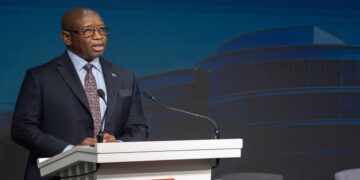















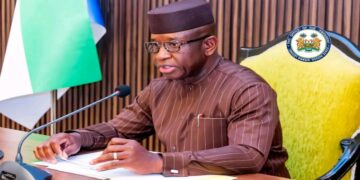

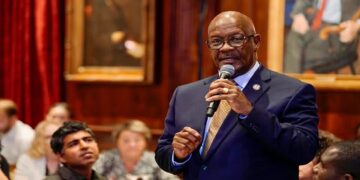
























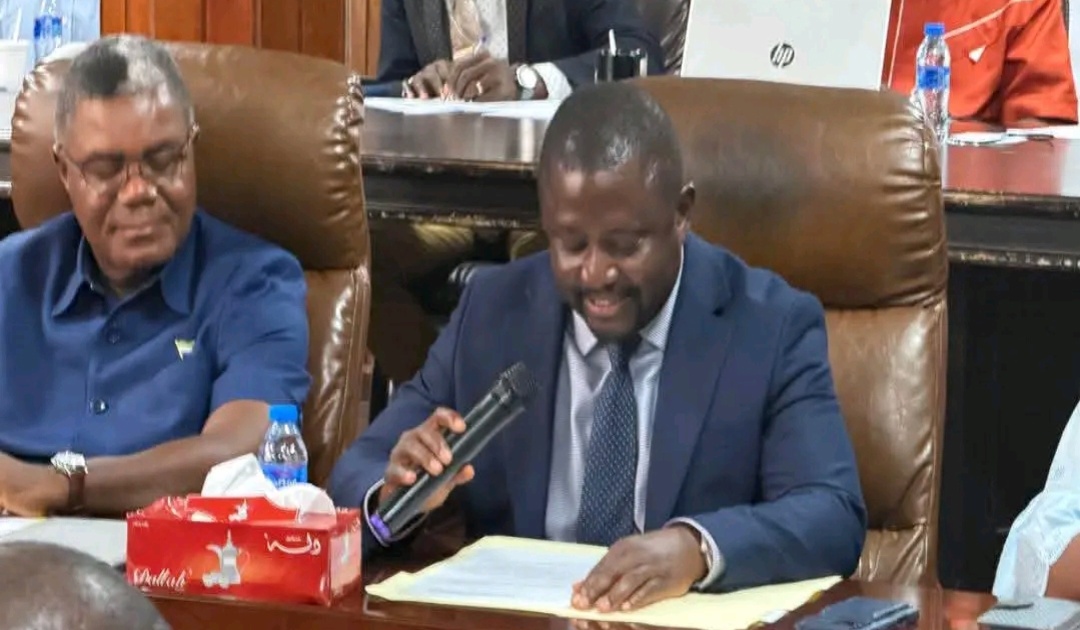
The Attorney General and Minister of Justice, Alpha Sesay Esq., on Tuesday laid the Protocol before Parliament at the House of Parliament, Tower Hill, Freetown, marking the first formal step towards Sierra Leone becoming a State Party to the African Court on Human and Peoples’ Rights.
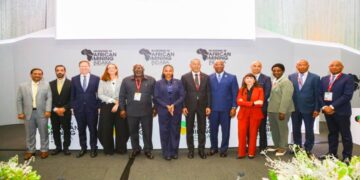
The parliamentary action coincides with the 20th anniversary of the African Court on Human and Peoples’ Rights, making Sierra Leone’s move particularly significant as African nations reflect on two decades of strengthening continental mechanisms for the protection and enforcement of human rights.
Once ratified, the Protocol will enable Sierra Leone to play a more active role within Africa’s human rights framework and reaffirm its commitment to the principles enshrined in the African Charter on Human and Peoples’ Rights.
The Government of Sierra Leone has commenced the process of ratifying the Protocol to the African Charter on the Establishment of the African Court on Human and Peoples’ Rights, reinforcing the country’s commitment to the promotion of human rights, the rule of law, and regional judicial cooperation.
The Government’s latest initiative complements ongoing efforts to modernise the country’s legal and justice systems through greater adherence to regional and international legal instruments.
Sierra Leone has also continued to demonstrate its commitment to international intellectual property protection by aligning with key treaties administered by the World Intellectual Property Organization (WIPO) and the African Regional Intellectual Property Organization (ARIPO).
Among the principal international agreements are the Berne Convention for the Protection of Literary and Artistic Works (1886), the Madrid Agreement Concerning the International Registration of Marks (1891), the Rome Convention for the Protection of Performers, Producers of Phonograms and Broadcasting Organisations (1961), the WIPO Copyright Treaty (1996), the WIPO Performances and Phonograms Treaty (1996), the Singapore Treaty on the Law of Trademarks (2006), the Budapest Treaty (1977), the Hague Agreement Concerning the International Registration of Industrial Designs, the Lisbon Agreement, the Banjul Protocol on Marks (1993), and the Protocol on the Voluntary Registration of Copyright and Related Rights (2004), among other international legal instruments.
These treaties provide internationally recognised standards for the protection of copyrights, trademarks, patents, industrial designs, geographical indications, performers’ rights, and related intellectual property rights, while encouraging innovation, creativity, investment, technology transfer, and economic development.
Legal experts say Sierra Leone’s continued participation in international and regional legal frameworks reflects the country’s determination to strengthen constitutional governance, improve access to justice, protect fundamental rights, and promote sustainable national development.
The Protocol will now undergo the parliamentary ratification process before Sierra Leone deposits its instrument of ratification and formally joins the African Court on Human and Peoples’ Rights as a State Party.