




















































Freetown – The head of the National Telecommunications Authority (NaTCA), Amara Brewah, has urged regulators, banks, mobile network operators and security agencies to work more closely together to fight rising digital fraud, describing it as a serious threat to consumers, regulation and national security.
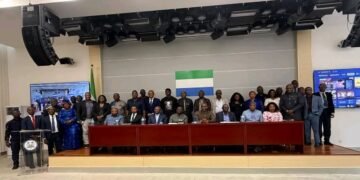
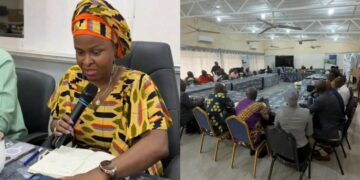
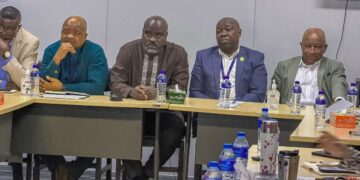
Speaking at the National Mobile and Digital Fraud Mitigation Workshop, Brewah said the rapid growth of mobile money and other digital services has brought clear benefits to Sierra Leoneans. At the same time, it has opened the door to more sophisticated scams that are emptying people’s wallets.
Many citizens, he noted, are tricked by fake text messages, phone calls and online links that promise cash prizes or other rewards. They follow the instructions, only to discover later that their mobile money accounts have been drained.
“For the victim, this is not simply a cybersecurity incident,” Brewah said. “It represents lost income, broken trust and, in many cases, disruption to livelihoods.”
He stressed that digital fraud is no longer just a technology problem. “It is a consumer protection, regulatory, law enforcement and national security concern.”
Brewah said NaTCA’s role goes beyond expanding connectivity. “We must ensure that the networks, services and systems upon which citizens increasingly depend are secure, resilient and properly governed.”
He pointed to existing laws, including the Cybersecurity and Cybercrime Act of 2021 and the National Communications Act of 2022, as a solid foundation for tackling cybercrime, protecting critical infrastructure and holding service providers accountable. But he warned that laws alone are not enough.
“Laws by themselves will not prevent crime. Effective implementation, compliance, enforcement and institutional cooperation are essential if we are to protect consumers and safeguard the country’s digital ecosystem.”
Brewah listed common threats facing the public: SIM swap fraud, phishing, identity theft, impersonation, fraudulent calls and texts, mobile money scams, and the misuse of phone numbers. These crimes, he said, often cross borders and involve several institutions at once.
“A single fraudulent transaction may involve a telecommunications network, a mobile money platform, a commercial bank, digital identity systems and criminal investigators. Our regulatory response must therefore be equally coordinated.”
He called on mobile network operators, mobile money providers and other digital service providers to improve fraud detection, better protect customer data, respond quickly to complaints, and cooperate fully with regulators and police. Where rules are broken, he said, enforcement must follow.
Consumers, he emphasised, must remain at the heart of every anti-fraud effort. “When citizens lose money to digital fraud, they do not distinguish between the telecommunications regulator, the bank, the mobile money operator or the police. They simply ask, ‘Who will help me?’”
Brewah urged the creation of clear reporting channels, faster investigations and proper support for victims. He also stressed the need for continuous public education so people can spot phishing messages, fake promotions, impersonation scams and suspicious calls.
“Consumer education is essential, but it must complement—not replace—strong institutional safeguards.”
He reaffirmed that cybersecurity remains a national priority. The Government, he said, will keep working with the Bank of Sierra Leone, law enforcement, cybersecurity bodies, mobile operators, banks, civil society and other partners to improve information sharing, incident response, compliance and public awareness.
Only a united national effort, Brewah concluded, can rebuild public trust in digital financial services, better protect citizens and support the continued growth of Sierra Leone’s digital economy.