














































Freetown — Sierra Leone’s main opposition All People’s Congress (APC) has announced plans to seek legal redress against the recently passed Constitution of Sierra Leone (Amendment) Bill, 2025, setting the stage for a potential Supreme Court showdown over changes to the 1991 Constitution.
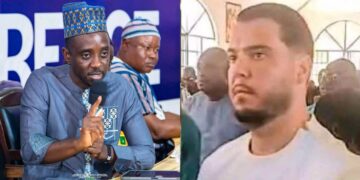
Ady Macauley, an APC flagbearer aspirant, declared that the party’s next step is to challenge what he termed the “purported amendment” of the national Constitution through the courts.
“Our next line of action is to go to the court on the purported amendment of our national Constitution,” Macauley said.
The announcement comes amid intense controversy following the Bill’s passage in Parliament on 10 August 2026. APC Members of Parliament walked out of the Chamber in protest after Speaker Segepoh Solomon Thomas ruled that a simple majority was sufficient for voting on the amendments, rather than the two-thirds threshold of all Members of Parliament required under Section 108(2)(b) of the 1991 Constitution.
With Parliament comprising approximately 149 members, the APC maintains that at least 100 votes were needed at both the second and third readings. The party argues that the Speaker’s interpretation conflicts with the clear constitutional requirement for a supermajority of the entire membership, not merely those present and voting. National Secretary General Lansana Dumbuya and other APC figures have described the process as a “legislative heist” that undermines constitutional safeguards.
The Bill introduces several significant reforms. These include lowering the presidential election victory threshold from 55 percent to a simple majority (50 percent plus one), subject to a candidate securing at least 20 percent of votes in two-thirds of the country’s districts; provisions for proportional representation in aspects of the electoral system; a constitutional guarantee of at least 30 percent women’s representation in political nominations; and expanded opportunities for Sierra Leoneans with dual citizenship to contest parliamentary seats and hold certain public offices (while retaining stricter requirements for the presidency and vice-presidency).
The APC has publicly supported some of these measures, including the 30 percent women’s quota and dual-citizenship provisions for parliament and ministerial roles, viewing them as steps toward greater inclusion. However, the party strongly opposes the reduced presidential threshold and any shift away from the first-past-the-post constituency system, arguing that these changes lack broad national consensus and could alter the electoral landscape in ways that disadvantage opposition parties.
Attorney General and Minister of Justice Alpha Sesay has indicated that a constitutional referendum could still be held before or alongside the 2028 general elections, allowing Sierra Leoneans to decide on key aspects of the framework. Civil society groups, including the Institute for Legal Research and Advocacy for Justice (ILRAJ), have also raised procedural concerns about the interpretation of Section 108 and the overall process.
The planned court action is expected to focus on whether the parliamentary proceedings fully complied with the 1991 Constitution’s amendment provisions. A judicial determination could clarify the binding nature of the two-thirds requirement and the validity of the Bill’s passage after the opposition walkout.