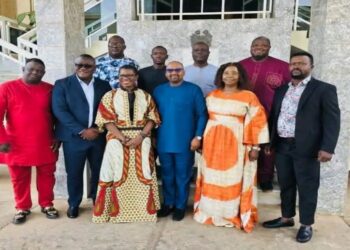



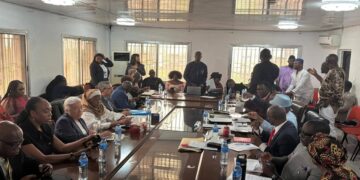







































The Ministry of Agriculture and Food Security (MAFS) has officially handed over 350 metric tons of table rice, donated by the Economic Community of West African States (ECOWAS), to the Ministry of Basic and Senior Secondary Education (MBSSE) in Bo City.
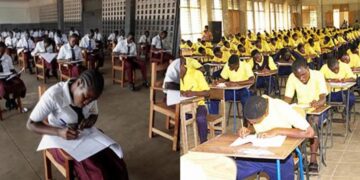
The donation forms part of broader regional support to strengthen Sierra Leone’s national school feeding programme and improve food security among schoolchildren.
Speaking during the handover ceremony, the Deputy Minister 2 of Agriculture, Mr. Sahr Hemore, expressed profound appreciation to ECOWAS for what he described as a timely and impactful intervention.
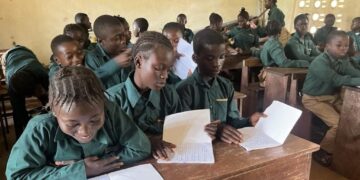
He noted that the rice donation will significantly contribute to ensuring that pupils across the country receive nutritious daily meals, thereby enhancing school attendance, concentration, and academic performance.
“This support from ECOWAS goes beyond food assistance,” Mr. Hemore stated. “It is an investment in our children’s future, in human capital development, and in the long-term stability and prosperity of Sierra Leone.”
Officials emphasized that school feeding programmes play a critical role in increasing enrolment and retention rates, particularly in vulnerable communities. The initiative aligns with government efforts to strengthen social protection systems while simultaneously supporting local food supply chains.
Representatives from both ministries reiterated their commitment to transparency and effective distribution mechanisms to ensure that the rice reaches intended beneficiaries nationwide.
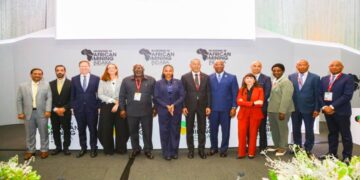
In a separate engagement, Deputy Minister 2 of Agriculture, Mr. Sahr Hemore, delivered the keynote address at the official launch of the €11.2 million Sustainable and Climate-Friendly Palm Oil Project in Pujehun Town.
The project, funded by the European Union and implemented by the Food and Agriculture Organization (FAO), aims to promote sustainable palm oil production, climate-smart agricultural practices, and environmental conservation.
Addressing stakeholders, farmers, and local authorities, Mr. Hemore described the initiative as a strategic milestone under the government’s flagship “Feed Salone” agenda.
He noted that the project is designed to strengthen value chains, improve market access, and empower smallholder farmers—particularly youth and women—through capacity building and technical support.
“The future of our agricultural sector depends on sustainability and innovation,” Mr. Hemore remarked. “This project will not only boost productivity but also protect our environment for future generations.”
The initiative seeks to enhance livelihoods in Pujehun District by providing training on best agronomic practices, supporting farmer cooperatives, and facilitating access to both domestic and international markets. Environmental safeguards embedded within the project are expected to ensure that palm oil production remains climate-resilient and aligned with global sustainability standards.
Stakeholders at the launch expressed optimism that the intervention will serve as a model for responsible agricultural development across the country.
Together, the rice donation and the oil palm project underscore the government’s multi-sectoral approach to strengthening food systems, supporting rural livelihoods, and advancing national development priorities.