






























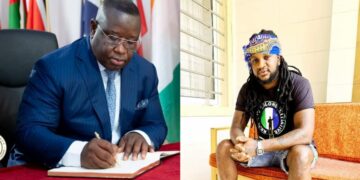







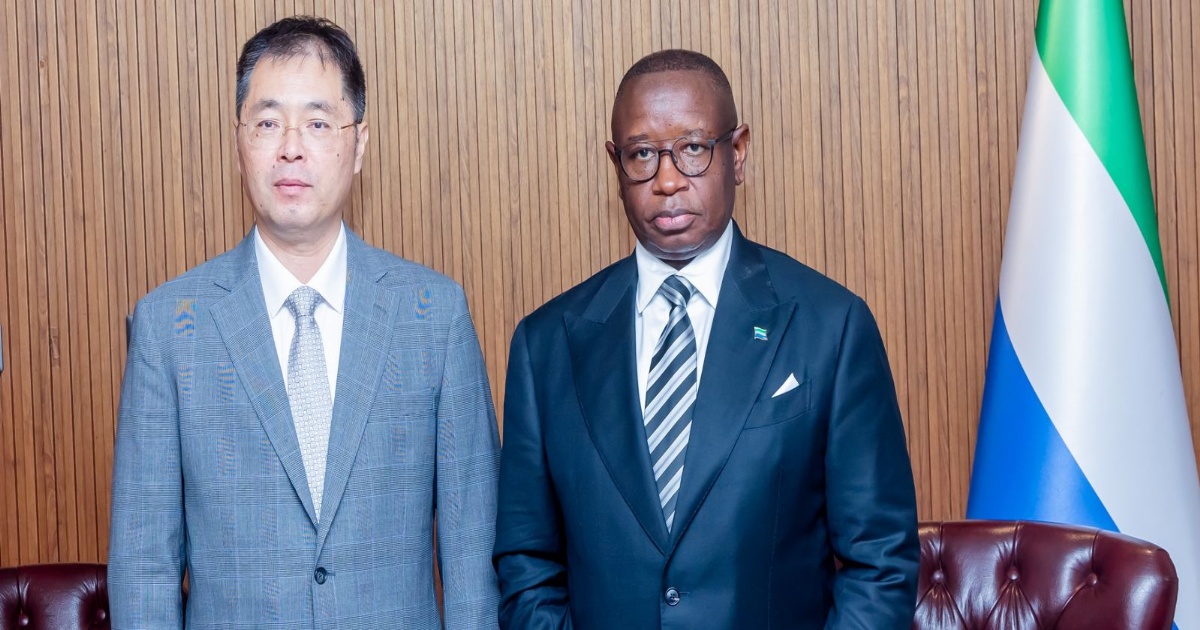
Freetown, Sierra Leone — The European Union Ambassador to Sierra Leone, Jacek Jankowski, has raised serious concerns about the growing threat of drug trafficking in the country, describing it as a pressing issue that requires urgent bilateral and international cooperation.
In an exclusive interview with AYV, Ambassador Jankowski emphasized that drug trafficking represents a significant reputational risk for Sierra Leone, potentially overshadowing the nation’s notable diplomatic achievements on the global stage. He stressed that the problem is a shared concern between the European Union and Sierra Leone.
“Sierra Leone has played an important role as a member of the United Nations Security Council for the 2024/25 term, while President Julius Maada Bio continues to provide leadership as Chair of the Economic Community of West African States (ECOWAS),” the ambassador noted. President Bio assumed the ECOWAS chairmanship in June 2025.
However, Ambassador Jankowski observed that negative developments often attract more public attention than positive achievements, despite the government’s ongoing efforts to strengthen the country’s international image.
He expressed hope that the justice ministers of Sierra Leone and the Netherlands would engage in constructive discussions to address drug-related concerns amicably and enhance cooperation.
Rising Drug Trafficking Concerns in Sierra Leone
Sierra Leone has increasingly become a transit hub for international drug networks, particularly for cocaine moving from South America to Europe, as well as synthetic drugs like “kush” — a highly addictive and dangerous substance linked to thousands of deaths across West Africa. Reports indicate that precursor chemicals for these drugs have been imported via routes involving countries such as China, the Netherlands, and the United Kingdom.
The country’s ports and coastline have been exploited by transnational criminal organizations, with Lebanese and Nigerian networks playing prominent roles in local distribution. While Sierra Leone has made few major drug seizures at its own ports in recent years, significant hauls linked to the country have been recorded in Europe, particularly in ports like Antwerp and Brussels.
The issue gained renewed international attention amid reports involving high-profile fugitives, including Dutch national Jos Leijdekkers, with allegations of the country being used for drug transshipment and related activities.
Government Response and Challenges
The Sierra Leonean government has taken steps to combat the crisis through the Transnational Organised Crime Unit (TOCU). As of early 2026, TOCU secured 52 drug-related convictions nationwide, including lengthy sentences of up to 40 years for major kush trafficking cases.
Despite these efforts, challenges persist, including limited resources, weak border controls, and concerns over potential high-level complicity. International partners, including the United States and the EU, have highlighted the need for stronger institutional integrity and capacity building to tackle money laundering and organized crime linked to the drug trade.
Ambassador Jankowski’s remarks underscore the EU’s willingness to support Sierra Leone in addressing these transnational threats while balancing recognition of the country’s diplomatic contributions. Sierra Leone served as a non-permanent member of the UN Security Council from 2024 to 2025, including holding the presidency in November 2025, focusing on issues such as small arms, peacebuilding, and African priorities.