
























































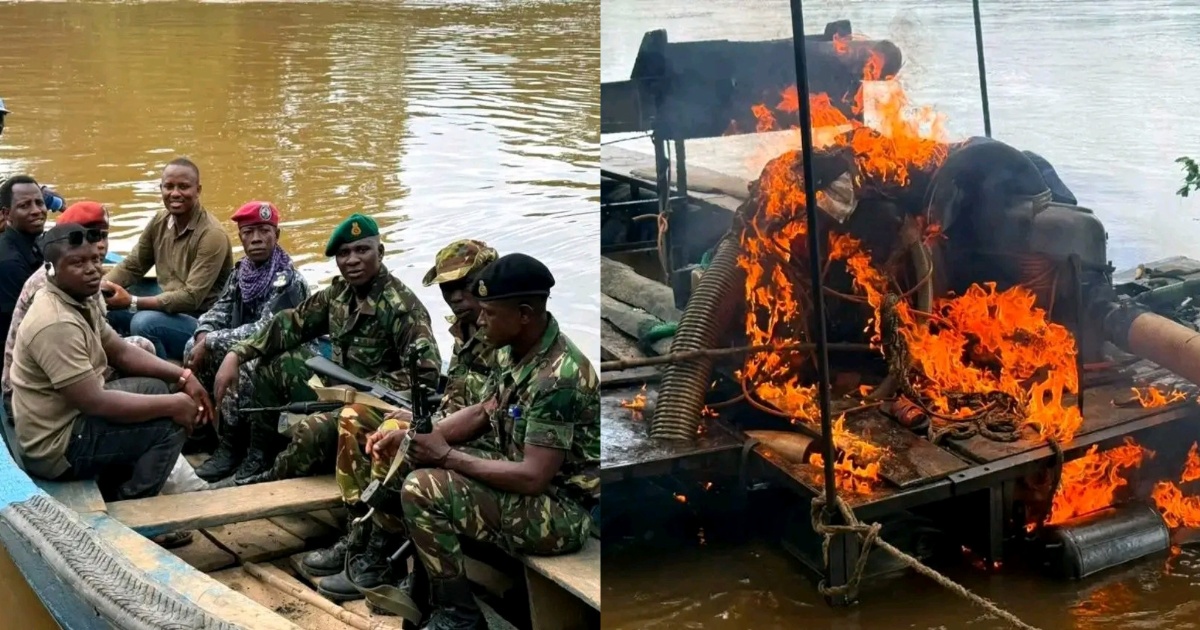
The Environmental Protection Agency (EPA) has intensified its campaign against illegal river dredging, with its Southern Region enforcement team last week destroying illegal dredging equipment along the River Sewa in an operation aimed at protecting the country’s fragile aquatic ecosystems.
The exercise forms part of the government’s broader efforts to curb illegal mining and dredging activities that have degraded water bodies, threatened biodiversity and undermined the livelihoods of communities that depend on rivers for fishing, farming and domestic use.
According to the EPA, illegal dredging poses a serious threat to the environment by disturbing riverbeds, increasing water pollution, accelerating erosion and destroying critical habitats for fish and other aquatic species.
While environmental advocates have welcomed the agency’s firm action against illegal operators, concerns have been raised over the method used to dispose of confiscated equipment during enforcement operations.
Critics warn that burning or destroying dredging machinery at the scene could release harmful pollutants into the air, soil and nearby water sources if such actions are not carried out in accordance with approved environmental safety standards.
The concerns have fuelled calls for greater transparency over whether the EPA conducts adequate environmental assessments and fully complies with environmental protection laws and procedures before destroying seized equipment.
Environmental experts note that illegal river dredging causes extensive ecological damage by removing vegetation, destabilising riverbanks and destroying breeding, feeding and sheltering grounds for fish, insects and other aquatic life. They argue that enforcement measures should not create additional environmental risks while addressing existing ones.
Stakeholders say the fight against illegal mining and dredging must be matched by environmentally responsible enforcement practices that uphold the principles of conservation the agency seeks to protect.
They have urged the EPA to publish clear guidelines on the disposal of confiscated equipment and ensure all enforcement operations comply with national environmental regulations and internationally recognised best practices.
The EPA has also encouraged the public to support its campaign against environmental crimes by reporting illegal mining, dredging and other environmental violations through its toll-free hotline, 1999.
As Sierra Leone continues to confront the environmental challenges posed by illegal mining, the success of enforcement efforts will depend not only on stopping environmental crimes but also on ensuring that enforcement actions themselves meet the highest standards of environmental stewardship.