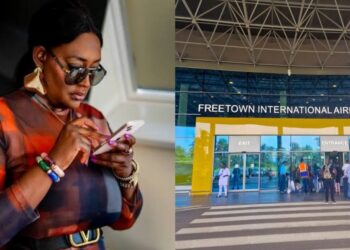









































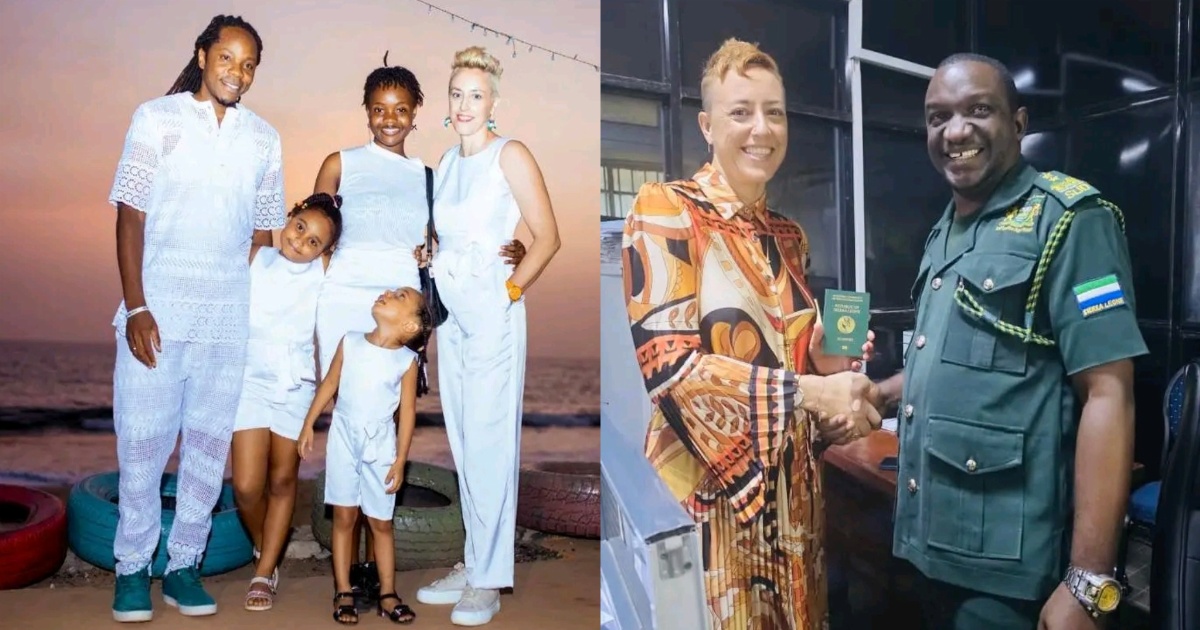
Freetown — Sierra Leone’s Chief Minister David Sengeh has publicly celebrated his wife, Kate Krontiris, after she officially became a Sierra Leonean citizen, receiving her new passport in a milestone moment for their family and the country’s immigration system.
In a heartfelt social media post, Sengeh reflected on their journey together, which began more than a decade ago when Krontiris, then working on an MIT event, recruited him as a speaker. Their connection quickly deepened, leading to a first date where he shared his aspirations to return home and serve in the public sector after completing his studies.
Years later, the couple married, welcomed children, and relocated to Sierra Leone. The transition was not without challenges. Krontiris left her family in the United States to build a new life, often managing as the primary caregiver while Sengeh traveled extensively for work. A highly educated expert with training from Columbia, Harvard, and MIT, she balanced family responsibilities with her passions in civic technology, music, and community development.
“Eight years of being a legal resident married to a Sierra Leonean,” Sengeh noted, led to her successful naturalization application, fulfilling all legal requirements.
The move unites the entire family under Sierra Leonean nationality. Their children, all born Sierra Leonean and baptized locally, have embraced the culture, learning elements of the Mende language and engaging enthusiastically with traditional music and dances.
Krontiris has made independent contributions to Sierra Leone, organizing workshops across districts including Kabala, Makeni, Kailahun, Pujehun, Bo, and the Western Area. She serves on the board of the Miatta Civic Center and played a role in developing the national Civics Curriculum.
Sengeh, who spent more years living in the United States than Krontiris has in Sierra Leone, expressed pride in never pursuing American citizenship himself despite professional achievements there. He highlighted experiences of racial challenges abroad but affirmed his deep commitment to his homeland.
“Now my entire family can all carry those green passport books proudly,” he wrote.
Krontiris shared her own excitement after receiving her passport at the Immigration Department, noting it as one of the first issued under Sierra Leone’s new fully digitized passport system. The upgraded process, accessible via passport.slid.datahub.gov.sl, aims to enhance transparency, reduce informal fees, and streamline service delivery.
As a user experience researcher with prior experience modernizing immigration systems in the Obama-era U.S. Digital Service, Krontiris appreciated both the improvements and the inevitable minor hiccups in such transformations. She described the digitized system as a practical example of inclusion through better service design—cutting down on repeated visits, lost paperwork, and opaque intermediaries.
In her post, she connected the experience to the “Yes We Can” ethos she carried from her time in public service, emphasizing collective power to reform outdated systems for the benefit of citizens.
The couple’s story reflects broader themes of global citizenship, cultural adaptation, and national pride. While acknowledging the complexities of migration, identity, and international relations.