














































Nyimbadu, Sierra Leone – December 10, 2025 – In a heartbreaking incident that has reignited concerns over child labor in Sierra Leone’s unregulated mining sector, two teenagers were killed on Tuesday when a makeshift gold pit they were digging collapsed, burying them alive in the diamond-rich Kono District.
The victims were identified as 16-year-old Mohamed Bangura and 17-year-old Yayah Jenneh, both residents of Nyimbadu village in the Eastern Province.
The young men had slipped away from home early that morning, drawn by the promise of quick earnings to support their struggling families amid widespread poverty in the region.
According to local reports, the unsupported artisanal pit, reaching depths of about four meters, gave way suddenly, trapping the boys under tons of earth and debris.
Community members rushed to the scene upon hearing cries for help, but rescue efforts were hampered by the lack of proper equipment. An excavator was eventually summoned to clear the rubble, but by the time the boys were recovered hours later, it was too late.
“We dug with our hands at first, but the soil kept falling,” recounted one villager who witnessed the chaos. The bodies were laid out in white cloth for communal mourning, leaving the village in a state of profound grief and disbelief.
Yayah Jenneh’s mother, Namina Jenneh, a widow supporting five other children, clutched a cracked phone displaying her son’s photo as she spoke through tears.
Herself a former miner, she had introduced Yayah to the pits out of necessity but expressed deep regret.
“He didn’t tell me he was going to that site—if I had known, I would have stopped him,” she said, her voice breaking. Yayah had been a key provider for the family, using his meager mining earnings to buy food and essentials. “Now, who will help us? We have nothing left,” she added.
This tragedy marks the third fatal mining accident in Kono District over the past four years, with at least five children losing their lives in similar collapses.
The district, long synonymous with Sierra Leone’s diamond boom that fueled the country’s brutal 1991-2002 civil war, remains a hotspot for artisanal and small-scale mining (ASM). Gold and diamonds extracted here sustain an estimated 300,000 people nationwide, but the sector’s informality breeds deadly risks: unstable pits, no safety gear, and exposure to toxic dust and chemicals.
Child labor permeates these operations, driven by entrenched poverty where over 60% of households in Kono and neighboring Kenema districts live below the poverty line. U.S. Department of Labor reports indicate that children as young as five are trafficked or sent by families to work in diamond and gold mines, often for $0.15–$0.60 a day. In Kono and Kenema alone, field studies estimate up to 10,000 children engaged in hazardous tasks like shoveling sand, hauling 50-60 kg loads of gravel, and washing ore—work linked to chronic injuries, respiratory illnesses, and school absenteeism rates of 25–35%.
Many, like 17-year-old Komba Sesay, mine to fund school fees and exams, despite the dangers. “I want to return to school. I’m not happy here,” Sesay told reporters, his hands calloused from sifting riverbed soil.
Local child protection activist Sahr Ansumana blames desperation: “Poverty is driving children into dangerous mining work. If you ask some parents, they’ll tell you there’s no other alternative. They are poor, they are widows… They themselves encourage the kids to go and mine.”
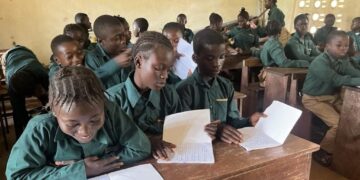
Even educators are affected; Roosevelt Bundo, headteacher at Gbogboafeh Aladura Junior Secondary School in Nyimbadu, noted that teachers abandon classes for the pits, as government salaries—averaging $50–$70 monthly, pale against potential mining windfalls.
Despite Sierra Leone’s laws prohibiting child labor under 18 and requiring mine operators to maintain birth registers, enforcement is weak. District labor officers are under-resourced, and corruption allows illegal sites to thrive, with mine owners sometimes bribing officials or paying hush money to families after accidents.
International efforts, like De Beers’ GemFair program launched in 2018, aim to promote ethical sourcing through digital tracking and training at 14 Kono sites, but critics say it covers only a fraction of the 1,700 licensed artisanal operations nationwide.
Information Minister Chernor Bah acknowledged the challenges when contacted by BBC News, emphasizing the government’s education investments.
“We spend about 8.9% of our GDP—the highest in the sub-region—on education, funding teachers, school-feeding programs, and subsidies to keep children in the classroom,” he said. Yet, with 35% of children facing chronic malnutrition and over 8,000 in eastern districts prioritizing mining over schooling, such measures have yet to stem the tide.
In a stark sign of the cycle’s persistence, mining resumed in Nyimbadu just one day after the boys’ funerals, with children and even off-duty teachers spotted at nearby sites, hands plunged into muddy streams in search of elusive gold flecks.
Community members, however, are pleading for more direct intervention. Activist Sahr Ansumana appealed urgently: “We need help. Not prayers. Not promises. Help.”
As Sierra Leone grapples with its post-war legacy, where diamonds once bankrolled atrocities but now exacerbate inequality,calls grow for targeted aid: vocational training, stricter mine inspections, and cash transfers to keep families afloat without endangering the next generation. Without it, experts warn, Kono’s pits will claim more young lives in the relentless pursuit of buried treasure.