




















































A teacher who served as a West African Examinations Council (WAEC) examiner is currently in the custody of the Anti-Corruption Commission (ACC) over alleged examination malpractice linked to the just-concluded West African Senior School Certificate Examination (WASSCE).
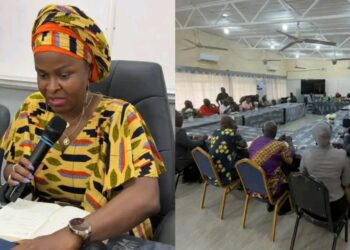
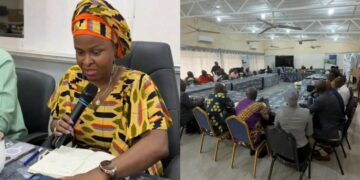
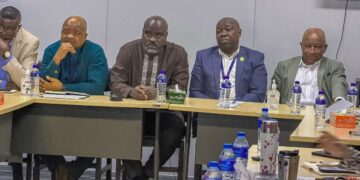
ACC Commissioner Francis Ben Kaifala disclosed this on Wednesday, 26 August 2026, during a special edition of the Civic Town Hall organised by the Ministry of Information and Civic Education at the Miatta Conference Centre.
The event focused on the theme “How Do We Address the Threat to Quality Education in Sierra Leone?”
According to Kaifala, WAEC reported the teacher after allegations emerged that he went door-to-door soliciting money from parents in exchange for giving their children the chance to rewrite the exams.
He described the scale of malpractice he has witnessed over the years as deeply troubling, recalling a 2019 incident in which he saw the extent of planning, coordination and deliberate efforts to undermine the education system.
Kaifala noted that his first encounter with exam malpractice came in 2018, shortly after he took office, when he found students still writing public exams as late as 10:00 pm in a hall in Aberdeen, after which the scripts were packaged and sent to WAEC.
He stressed that the problem involves collaboration among teachers, principals, parents and even some WAEC officials.
“This comes from desperation in the system because parents have found out that access to privileges, opportunities and success is tied to education, and they want their children to be among them,” Kaifala said.
WAEC’s Head of Public Affairs, Sallieu Kamara, confirmed that the teacher had been handed over to the ACC.
He firmly denied that WAEC leaks examination papers in advance and insisted the council does not tolerate malpractice.
“I want to assure the public that WAEC has integrity, and we are maintaining it during the conduct of exams,” Kamara stated. He added that nobody is above the law and that any staff member found guilty would be exposed.
Kamara also referenced a 2024 case in which an examiner was caught copying directly from the marking scheme and was immediately reported to the ACC.
He noted that WAEC, the Ministry of Basic and Senior Secondary Education and the Sierra Leone Teachers Union have a joint communiqué against examination malpractice.
Sierra Leone Teachers Union President Ibrahim Bankapoma Kargbo linked the problem partly to poor conditions of service, low salaries, misuse of technology, poverty, favouritism in employment and a general loss of integrity.
He argued that better pay would reduce the temptation for teachers to engage in malpractice, while insisting he does not condone corruption.
Minister of Information and Civic Education Chernor Bah rejected that view, saying poor conditions cannot excuse teachers’ involvement in exam malpractice.
Minister of Basic and Senior Secondary Education Conrad Sackey clarified that the 2026 National Primary School Examination (NPSE) results were not withheld because of malpractice. Instead, they were delayed because some schools failed to submit continuous assessment records to WAEC; releasing incomplete results would have unfairly affected pupils’ overall scores.
Sackey announced a 78.2 per cent pass rate for the NPSE and congratulated the candidates. He revealed, however, that there were about 326 alleged cases of exam malpractice in the just-concluded NPSE.
Sackey said a new WAEC bill is in the works that will criminalise activities that undermine the quality of education. The government also plans a civic campaign against exam malpractice and is deploying digital technology to curb the practice.
He confirmed that punitive measures are already being applied, including the suspension of 58 principals for one year without pay.