





































Freetown — The Supreme Court of Sierra Leone has fixed 7 October 2026 as the date for hearing all matters filed before it concerning the Constitution of Sierra Leone (Amendment) Bill, 2025.
The Court said the cases will be heard expeditiously so that they can be resolved in good time and in accordance with the laws of Sierra Leone.
The announcement comes after President Julius Maada Bio decided not to give his assent to the Bill and instead referred questions surrounding it to the Supreme Court for interpretation.
The Bill was presented to the President for assent on 10 September after Parliament passed it on 10 August 2026.
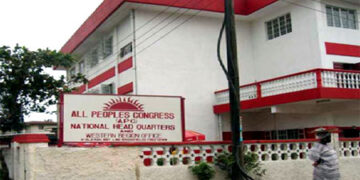
That parliamentary vote remains highly contested. Opposition All People’s Congress (APC) MPs walked out of the chamber before the vote. Speaker Segepoh Solomon Thomas then ruled that the required support was a majority of members present and voting, rather than the two-thirds of the full membership of Parliament (100 out of 149 MPs) that many legal experts and the opposition say is required under Section 108 of the 1991 Constitution.
Several challenges have already been lodged. The APC has filed two separate cases. Member of Parliament Hon. Osman Abdal Timbo, through former Attorney-General Joseph Fitzgerald Kamara, has also taken the matter to the Court seeking clarity on the constitutional requirements. In addition, the Institute for Governance Reform (IGR) petitioned the President on 4 September, raising constitutional questions about how the Bill was passed. Acting under Section 122(1) of the Constitution, President Bio directed the Attorney-General to refer the issues to the Supreme Court.
The Bill itself proposes major changes to the country’s electoral and governance system. Key provisions include:
– Reducing the presidential first-round victory threshold from 55% to 50% plus one vote, with a geographic spread requirement
– Making proportional representation the permanent system for electing ordinary Members of Parliament
– Introducing a constitutional minimum 30% quota for women in political nominations
– Expanding the right of dual citizens to contest parliamentary seats and hold public office
Supporters say the reforms will strengthen inclusion, modernise the electoral system and reflect years of national consultation dating back to the Lomé Peace Agreement and subsequent review processes. Critics, including sections of the opposition and some civil-society groups, argue that the manner of the Bill’s passage and certain of its provisions risk undermining constitutional safeguards.
The Supreme Court’s decision to hear all related matters together on 7 October is expected to provide much-needed clarity on the voting threshold and the validity of the process.
Sierra Leoneans across the country will be watching closely as the highest court in the land prepares to rule on one of the most significant constitutional questions in recent years.