











































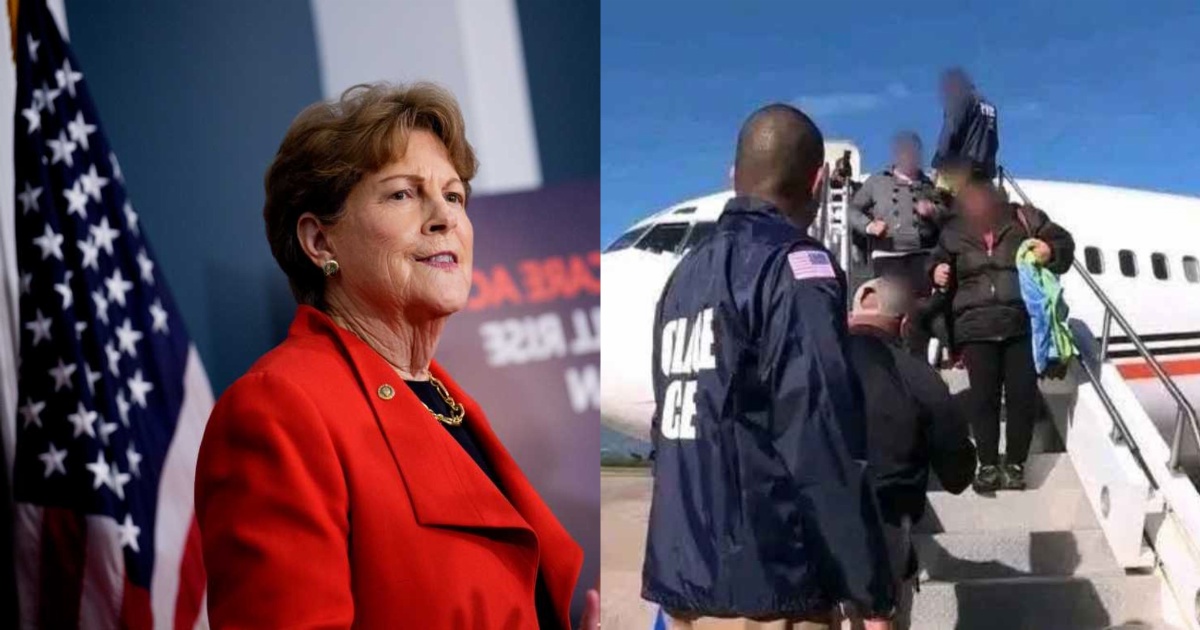
Freetown – The United States Senate Foreign Relations Committee has accused Sierra Leone of failing to fully honour its commitments under a bilateral arrangement to temporarily host and resettle third-country nationals deported from the United States, even after receiving a $1.5 million grant to support the programme.
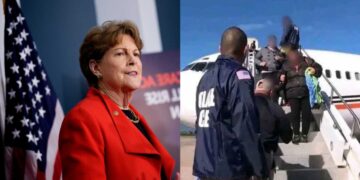
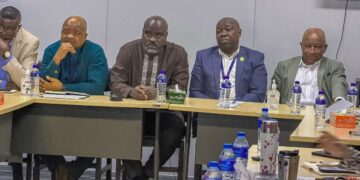
The allegation surfaced during a committee hearing in Washington on 5 August 2026, when Ranking Member Senator Jeanne Shaheen questioned Daniel Travis, the career diplomat nominated to serve as the next US Ambassador to Sierra Leone.
“There is now credible evidence that Sierra Leone is violating this commitment,” Senator Shaheen stated. She pointed to media reports indicating that some of the deportees received in Freetown have been sent onward to their countries of origin, where they may face risks of persecution, despite earlier protections granted by US courts.
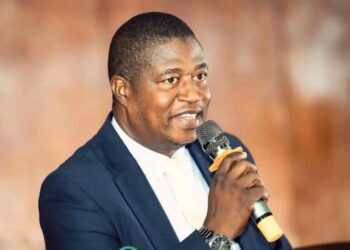
Travis, if confirmed, pledged to press for strict adherence. “I can assure you that if approved, I will advocate that the government of Sierra Leone comply with all of their agreements, including the third-country national arrangement, to the letter,” he told the committee.
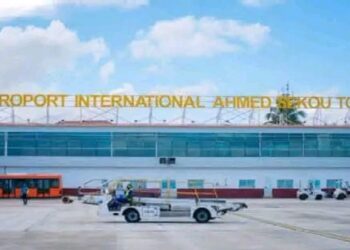
The Third Country National Arrangement (TCNA), formalised through diplomatic notes in January 2026, allows Sierra Leone to temporarily receive up to 300 citizens of Economic Community of West African States (ECOWAS) countries who are being removed from the United States each year, with a monthly limit of 25 people. The programme is designed as a short-term transit measure: arrivals receive reception support, temporary accommodation (often in hotels near the airport), and humanitarian assistance before onward repatriation to their home countries, typically within weeks or up to 90 days.
The Government of Sierra Leone contracted Kenvah Solutions (SL) Limited to handle key operational services, including reception, temporary housing, food, healthcare, and case management. The entire programme is funded by a $1.5 million US grant specifically for humanitarian and operational costs, so it does not draw on Sierra Leonean taxpayer funds.
To date, Sierra Leone has received three groups: nine people on 20 May 2026 (mainly from Ghana, Guinea, Senegal and Nigeria), about a dozen on 18 June, and ten more on 31 July (including Ghanaians, a Liberian, a Beninese, a Nigerian and a Togolese). Official figures put the cumulative total at around 32 individuals. Of the first two groups, 22 have already been successfully repatriated to their countries of origin after consular and travel documentation was completed, according to the Ministry of Information and Civic Education.
Former Foreign Affairs Ministe, Timothy Musa Kabba described the arrangement as a cooperative measure that strengthens bilateral ties with the United States and supports orderly migration management within the West African region. Authorities emphasise that only ECOWAS nationals are accepted and that the process is conducted with inter-agency coordination involving Immigration, the Sierra Leone Police, the Office of National Security, the Ministry of Health and others.
Human rights advocates and some US media reports have raised concerns that returning individuals who previously received protection orders in the United States (such as withholding of removal or Convention Against Torture deferrals) could amount to refoulement, sending people back to places where they face serious risk of persecution or harm. This principle is protected under international law, including the 1951 Refugee Convention, the Convention Against Torture, and the OAU Refugee Convention, to which Sierra Leone is a party.
The issue comes at a delicate moment in US–Sierra Leone relations. Washington has placed increasing emphasis on accountability in such bilateral deals, and similar third-country arrangements with other African nations have drawn scrutiny. For Sierra Leone, the programme was presented as a way to assist a key partner while receiving dedicated funding and potentially easing other bilateral frictions (including earlier visa-related tensions).
Should Daniel Travis be confirmed as ambassador, the third-country national agreement is expected to remain a point of focus in his work, with the US side pressing for full compliance with the terms of the deal and international standards on the treatment of the deportees.
The Ministry of Foreign Affairs and International Cooperation has not issued a detailed public response to the specific Senate comments as of this report.